
2026 Top Standing Stair Lift for Global Buyers?

Global buyers are paying closer attention to safer home mobility. The reason is demographic, not merely commercial. The United Nations World Social Report 2023 estimates that people aged 65 and older will reach 1.6 billion by 2050, nearly double the 2021 figure. The World Health Organization also reports that about 1.3 billion people experience significant disability worldwide. These figures make vertical access inside homes a practical concern.

A Standing Stair Lift can support users who struggle with conventional stair climbing. It may suit people with limited knee movement, reduced balance, or narrow staircases. However, suitability depends on more than motor power. Seat height, grab-handle position, foot clearance, emergency lowering, battery backup, and transfer space all matter. Small details matter.

Industry forecasts, including reports from Grand View Research and Fortune Business Insights, indicate continued growth in the global stair lift market. Yet their market sizes and growth estimates differ. That difference deserves attention. A sales ranking should not replace an independent safety assessment. The WHO Global Report on Health Equity for Persons with Disabilities emphasizes accessibility, personal autonomy, and inclusive design. Those principles should guide product comparisons in 2026.

For international purchasers, installation support is equally important. Voltage compatibility, spare-part availability, warranty terms, stair geometry, and local technician training can determine real-world performance. A polished product page may hide practical limitations. Buyers should request measured specifications, documented testing, user manuals, and after-sales commitments before ordering. The best Standing Stair Lift is not simply the most expensive model. It is the one that provides dependable, comfortable, and maintainable access for the intended user.
2026 Top Standing Stair Lift for Global Buyers?

What Is a Standing Stair Lift and Who Needs One?

2026 Top Standing Stair Lift for Global Buyers?

What Is a Standing Stair Lift and Who Needs One?

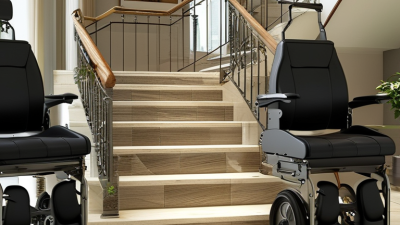
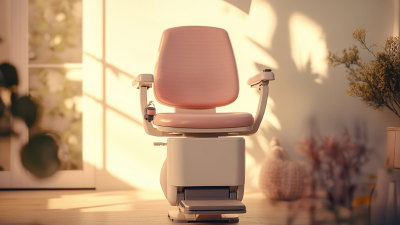
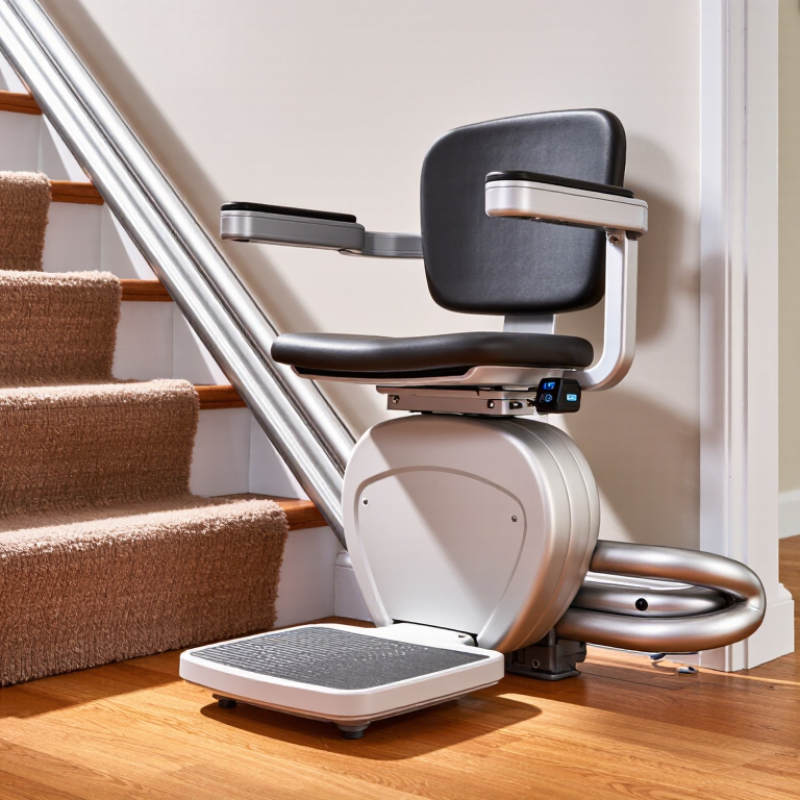
A standing stair lift supports the user in a semi-standing position while moving between floors. It usually includes a small perch seat, safety belt, footrest, and powered rail system. This design can suit people who struggle to bend their knees or hips fully. It may also help when a staircase is too narrow for a conventional seat.

The WHO Global Report on Health Equity for Persons with Disabilities estimates that 1.3 billion people live with significant disabilities worldwide. Meanwhile, the UN World Social Report 2023 projects that one in six people will be aged 65 or older by 2050. These figures do not prove that everyone needs a stair lift. They show why safer home access deserves careful attention.

A standing model is not automatically safer. Users need enough leg strength, balance, and grip control to remain stable during travel. People with severe dizziness, weak knees, or unpredictable falls may need another solution. An occupational therapist or qualified installer should assess transfers, stair width, landing space, and emergency access. I would also check the belt position, foot support, battery backup, and stop controls in person. Product labels can sound reassuring, but real comfort varies. Local electrical standards and accessibility requirements also matter for global buyers.

How Standing Stair Lifts Work on Different Staircase Designs

2026 Top Standing Stair Lift for Global Buyers?

How Standing Stair Lifts Work on Different Staircase Designs

Standing stair lifts support users who can stand briefly but struggle with deep bending or seated transfers. A compact perch seat, safety belt, and powered footrest create a semi-standing position.

WHO’s Global Report on Assistive Technology estimates that more than 2.5 billion people need assistive products worldwide. That figure may exceed 3.5 billion by 2050.

Straight staircases usually require one rail and predictable travel. The lift moves along a fixed track beside the steps. On narrow stairs, a folding rail can preserve walking space near the hallway. Measure the user’s shoulder width, knee clearance, and landing depth. A few centimeters can change daily comfort.

Curved stairs need a rail shaped to each bend, landing, or split flight. The lift may slow around corners to keep the passenger balanced. Spiral staircases are more difficult because turning space and step depth change continuously.

Open-tread stairs also need careful sensor positioning, especially where light passes between steps. EN 81-40:2020 provides safety requirements for powered stair lifts in many European markets, but local rules still matter.

WHO also stresses that proper assessment and training affect assistive-device success. In practice, buyers should request an on-site survey, not rely on photographs alone.

I have seen measurements look adequate on paper, yet handrails or door swings create uncomfortable bottlenecks. The design choice is not always obvious.

Key Features to Compare in 2026 Standing Stair Lift Models

2026 Top Standing Stair Lift for Global Buyers?

Standing stair lifts suit users who struggle with bent-knee transfers but can still stand briefly. The WHO and UNICEF Global Report on Assistive Technology estimates that over 2.5 billion people need assistive products today. That figure may exceed 3.5 billion by 2050. Demand alone does not prove quality.

Compare the standing platform first. It should provide stable foot support, a secure grab handle, and an adjustable safety belt. Check the maximum user weight with winter clothing included. A narrow rail may preserve hallway space, but it can reduce shoulder clearance. Measure every landing. Curved stairs need accurate surveys, not optimistic estimates.

Safety controls deserve careful testing. Look for obstruction sensors, controlled starts, a backup battery, and emergency lowering instructions. Ask whether the lift works during a power cut. The WHO Global Report on Ageing and Health links mobility with independence, yet comfort remains personal. A firm perch may suit one user and feel unsafe to another. Try the transfer position before ordering.

The UN World Social Report 2023 projects that one in six people will be over 65 by 2050. Buyers should compare service response times, warranty coverage, and technician training across regions. Ask for maintenance intervals and replacement-part availability in writing. A spreadsheet cannot show vibration on a tight bend. I would not trust a model that hides its noise rating or installation limits. Reliable advice sometimes means rejecting a fashionable feature.

Safety, Accessibility, and Comfort Standards for Global Buyers

2026 Top Standing Stair Lift for Global Buyers?

For global buyers, a top standing stair lift must balance safety, accessibility, and daily comfort. Standing users need a stable perch, firm knee support, and an adjustable hand grip. A secure seat belt matters, even on short staircases. A smooth start and stop can prevent sudden loss of balance. Small details matter.

In home-access assessments, I look for obstruction sensors, battery backup, emergency controls, and safe manual lowering. Controls should remain usable with limited hand strength. Call buttons at both landings reduce unnecessary climbing. The rail must leave enough space for walking users and household movement. Ask for documented conformity with electrical, machinery, and accessibility requirements in the installation country. Local inspection rules may differ.

Comfort is more than padded surfaces. The standing platform should support natural foot placement without forcing twisted knees. A quiet motor helps in shared homes, especially at night. Fold-away parts can protect narrow hallways, but they may become difficult for users with weak arms. This is an overlooked trade-off. Do not assume every compact design suits every staircase. Measure each landing, turning area, and transfer point before ordering. A trained installer should explain maintenance intervals, battery replacement, and emergency procedures in clear language. Even excellent equipment can feel unsafe when instructions are vague.

2026 Top Standing Stair Lift for Global Buyers? - Safety, Accessibility, and Comfort Standards for Global Buyers

The following procurement table summarizes practical evaluation benchmarks for standing and perch stair lifts. Values identified as buyer benchmarks are selection targets rather than universal legal requirements; the applicable product standard depends on the installation country and stair configuration.

Evaluation Dimension Recommended 2026 Buyer Benchmark Why It Matters for Standing Users Verification Method Relevant Standard or Guidance
Rated User Capacity At least 125 kg; 150–160 kg is a practical higher-capacity target where required. Provides an appropriate safety margin for the user, clothing, and small carried items. The rated capacity must not be exceeded. Check the product rating plate, technical file, installation manual, and conformity documentation. Capacity and loading requirements are addressed by stairlift and lifting-platform safety standards, including EN 81-40 and ISO 9386-2, where applicable.
Standing or Perch-Support Design A stable perch or standing platform with a backrest, side support, grab handle, and a clearly defined foot area. Reduces knee flexion and can assist users who find a conventional seated stair lift difficult to transfer onto. Confirm that the user can maintain balance while stationary and can reach the controls without leaning outside the support area. Product-specific safety assessment is required; the design should comply with the applicable national stairlift standard.
Seat, Perch, and Foot-Support Geometry Adjustable perch or seat height, anti-slip foot support, and a support position that keeps the user inside the prescribed restraint zone. Correct geometry helps reduce sliding, loss of balance, and excessive pressure on the knees or hips. Conduct a supervised trial with the intended user wearing normal footwear and using the normal transfer route. Refer to the manufacturer’s dimensional drawings and the installation requirements of EN 81-40, ISO 9386-2, or the local equivalent.
Safety Belt or Restraint An easily reachable, adjustable restraint with a positive latch and a design suitable for the user’s posture. Helps keep the user correctly positioned during acceleration, deceleration, and travel on steeper sections. Test fastening and release using one hand where possible; verify that the belt does not obstruct evacuation. Confirm the restraint arrangement in the product risk assessment and operating instructions.
Travel Control and Emergency Stop Constant-pressure controls, an accessible emergency stop or shutdown function, and controls usable from the normal standing position. Constant-pressure operation allows travel to stop when the control is released. Emergency controls are important if clothing, luggage, or a body part contacts an obstacle. During commissioning, release the control, operate the emergency stop, and confirm controlled stopping and reset procedures. Safety-control provisions are covered by the applicable stairlift product standard and relevant machinery electrical-safety requirements.
Obstacle and Collision Protection Pressure-sensitive or equivalent obstruction detection on the travel unit, foot area, and leading edges, with automatic stopping. Helps reduce the risk of trapping against steps, walls, doors, pets, or objects left on the staircase. Verify the stopping response during professional commissioning; do not perform unsafe tests without the installer’s procedure. Check conformity with the applicable stairlift safety standard and the manufacturer’s tested obstruction-clearance system.
Stair Compatibility The supplier should document compatibility with the actual stair width, pitch, winders, landings, doorways, and available parking areas. Standing models can require careful clearance checks because the user’s upper body and support handles may occupy more space than a compact seated posture. Require an on-site survey with measurements, photographs, travel path drawings, and confirmation of landing clearances. Installation must follow the product’s approved configuration and local building, electrical, and fire-safety requirements.
Battery and Power-Failure Operation Rechargeable battery operation, automatic charging at parking points, and a documented emergency-use procedure during mains failure. Allows the lift to complete trips during a power interruption, subject to the battery condition and the manufacturer’s limits. Ask for battery type, expected service life, charging time, low-battery warning, replacement interval, and emergency operating distance. Electrical installation and charging arrangements must comply with local electrical rules; equipment safety should be documented by the supplier.
Transfer and Landing Safety A clear, stable transfer area at the top and bottom, with the lift parked so that the user can enter and exit without twisting or stepping across the staircase. Many falls occur during transfers rather than during travel. A predictable entry and exit path is essential for independent use. Assess the complete transfer sequence with the user, including doors, handrails, lighting, footwear, and mobility aids. Use the installation manual and local accessibility or building guidance; exact clearance requirements vary by jurisdiction and product type.
Noise and Ride Comfort Smooth acceleration and braking, minimal vibration, and a published sound-pressure value where available. A buyer target below approximately 65 dB(A) may be used for residential screening, but it is not a universal legal limit. Lower vibration and noise can improve confidence, particularly for users with balance sensitivity or hearing-related concerns. Test the lift under normal load at different points on the staircase and ask for the measurement conditions used for any noise claim. Noise values are measurement-dependent; compare products only when test conditions are equivalent.
Environmental Protection Indoor equipment should be protected against dust and incidental moisture appropriate to the installation environment; outdoor systems require an explicitly stated outdoor rating. Moisture, condensation, dust, and temperature extremes can affect controls, batteries, sensors, and drive components. Check the declared IP rating, operating temperature range, corrosion protection, drainage provisions, and maintenance instructions. Ingress-protection classifications are defined by IEC 60529; the required rating depends on the installation location.
Accessibility of User Controls Large, tactile, high-contrast controls with clear direction indicators and, where needed, wired or wireless call/send controls at both landings. Supports users with reduced vision, limited dexterity, or one-sided weakness. Confirm that the user can identify, press, and release controls while wearing gloves or using limited hand strength. Apply the product standard together with relevant accessibility and human-factors guidance in the target market.
Maintenance and Serviceability A documented preventive-maintenance schedule, accessible service points, replaceable wear parts, and a defined response process for breakdowns. Regular inspection helps preserve braking, sensors, batteries, restraints, and travel performance. Request service intervals, inspection checklist, spare-parts availability, technician qualifications, and warranty terms. Follow the manufacturer’s instructions and any inspection obligations imposed by local law or building use.
Documentation and Global Compliance Country-specific declaration or certification, risk assessment, installation manual, user manual, wiring information, and translated safety labels. Clear documentation supports safe installation, user training, maintenance, customs clearance, and post-installation liability management. Verify the conformity route for the destination market rather than relying only on a generic “CE” or “international” statement. Depending on location, review EN 81-40, ISO 9386-2, ASME A18.1, applicable machinery and electrical rules, and local building requirements.

Buyer note: No single standing stair lift is suitable for every user or staircase. Final selection should be based on an on-site assessment by a qualified installer, a supervised user trial, verified load and travel limits, and the legal requirements of the installation country.

How to Select, Install, and Maintain the Right Standing Stair Lift

Selecting a standing stair lift begins with the staircase, not the product brochure. Measure every step, landing, curve, and doorway. A narrow stairway may require a compact rail or a folding seat option. Check the user’s height, balance, knee flexibility, and preferred hand position. A standing model suits some users, but it may be unsuitable for severe instability. Ask an occupational therapist or qualified installer for an honest assessment.

Installation should be completed by trained professionals who understand structural fixing and electrical safety. The rail must follow the stair angle smoothly, without reducing safe walking space. Test the lift at slow speed before regular use. Confirm that the footrest, safety belt, swivel mechanism, controls, and obstruction sensors work correctly. Keep the manual nearby. Small oversights matter.

Maintenance is simple, but skipping it creates risk. Wipe the rail and seat weekly with a dry or slightly damp cloth. Keep steps free from toys, shoes, and loose rugs. Check unusual noise, jerky movement, weak braking, or slower charging. Stop using the lift if these signs appear. Arrange professional servicing according to the installer’s schedule and local requirements. Batteries may last several years, but household use varies. I would not trust a “maintenance-free” claim without evidence. Safety deserves a second look.

2026 Top Standing Stair Lift for Global Buyers

How to Select, Install, and Maintain the Right Standing Stair Lift

This practical decision framework scores the main factors from 1 to 5 for global buyers. Stair geometry and user safety should receive the highest priority, while installation conditions and long-term maintenance help determine whether a standing stair lift is suitable for a specific home. Always confirm measurements, electrical requirements, emergency features, and local accessibility regulations with a qualified installer.