




Why Is Shilajit Extract in High Demand Worldwide?

Interest in Shilajit Extract reflects a wider shift toward ingredient-focused wellness products. Consumers increasingly ask where an ingredient comes from, how it is processed, and what evidence supports its use. The Council for Responsible Nutrition’s 2024 Consumer Survey found that 75% of U.S. adults use dietary supplements. Grand View Research valued the global dietary-supplement market at $177.5 billion in 2023. It forecast 9.1% annual growth from 2024 through 2030. These figures show category momentum, not shilajit-specific sales. That distinction matters.

Shilajit is a naturally occurring material collected from mountainous regions and processed into products such as extracts and capsules. Its appeal may reflect traditional use, distinctive origin stories, and growing interest in botanical ingredients. Yet consumer demand should not be mistaken for proof of health benefits. Evidence varies by product and claim, and broad market reports rarely isolate shilajit sales. Quality deserves close attention. Source details, purification methods, batch consistency, and independent testing for contaminants can help buyers assess a product more carefully. A label alone cannot answer every question. Manufacturers and retailers also need clear, restrained claims and reliable documentation. The market is expanding, but the evidence has gaps. Recognizing both points gives a more credible view of why Shilajit Extract is attracting attention worldwide.
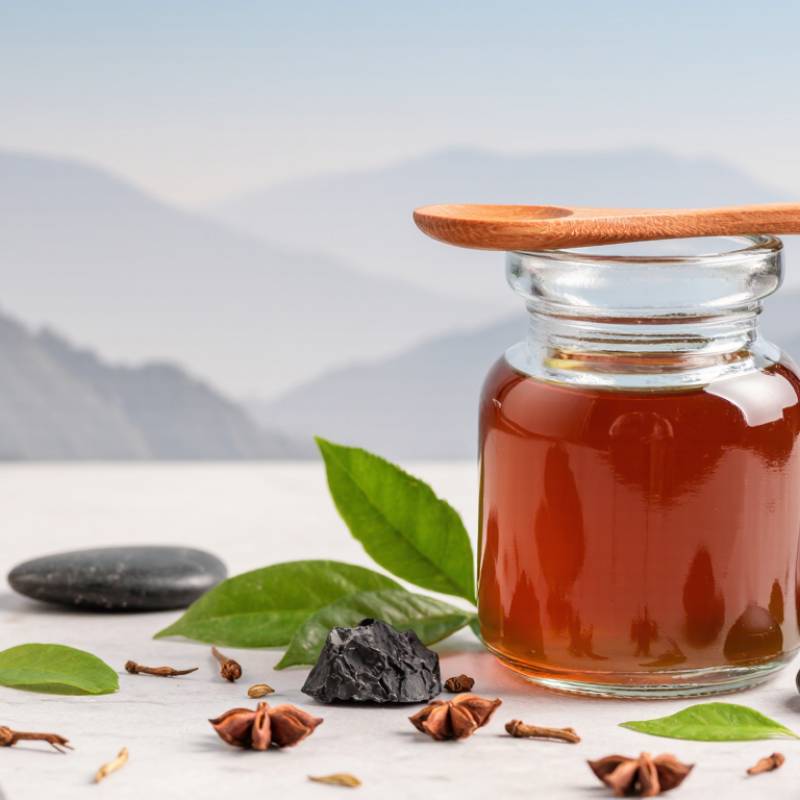
Why Is Shilajit Extract in High Demand Worldwide?

What Is Shilajit Extract and How Is It Obtained?

Shilajit extract is a concentrated preparation made from shilajit, a dark, mineral-rich material found in cracks of rocks in some mountain regions. It forms over long periods as plant matter and other organic material break down and interact with minerals. Its appearance can range from sticky, tar-like resin to dry powder. Not quite a simple herb. Its composition varies with location and processing.

To make an extract, producers typically collect raw material, remove stones and other debris, then purify it using water-based processing and filtration. Some methods further concentrate or dry the filtered liquid. There is no single universal process, so the label “extract” alone does not explain how thoroughly a product was purified. Reliable quality checks can include testing for heavy metals, microbes, and other contaminants. This matters because naturally sourced material may contain unwanted substances. Descriptions can sound certain; the details are worth checking.

Tips: Look for clear information about sourcing, purification, and independent testing. Avoid assuming that “natural” means safe or consistent. If you have a health condition, take medication, or are pregnant, ask a qualified healthcare professional before using it.

Which Compounds Are Found in Shilajit Extract?

Shilajit extract is a complex natural mixture, not a single active compound. A 2012 review by Carrasco-Gallardo and colleagues in BMC Complementary and Alternative Medicine describes four recurring groups: fulvic substances, humic substances, dibenzo-α-pyrones, and minerals. Fulvic compounds are often discussed for their role in carrying other molecules. Dibenzo-α-pyrones are smaller organic compounds. Mineral content can include trace elements, but the amounts depend on the source material and processing.

That variability matters. The review does not establish one fixed recipe or universal percentage for each compound. A dark resin from one geological deposit may differ from a purified extract made elsewhere. Labels can also report “fulvic acid” without explaining the testing method. That detail is easy to miss. It deserves scrutiny. The available chemistry research identifies constituents, but it does not prove that every product has the same composition or effects.

Tips: Check whether a product provides batch-specific testing for identity, mineral levels, and contaminants. Prefer results from an independent laboratory, and look for the test method and date. If a label gives only a broad “mineral-rich” claim, ask what was measured. A little uncertainty remains. That is a reason to read carefully, not to assume the extract is standardized.

What Is Driving Shilajit Extract’s Worldwide Demand?

Shilajit extract is drawing attention from consumers interested in traditional wellness ingredients and mineral-rich products. Its long history of use in parts of the Himalayas gives it cultural context, while modern interest in natural supplements brings it to a wider audience. Tradition matters. It is not proof of a health benefit, though. Scientific evidence is still developing, and studies do not support every claim made in the marketplace.

Convenience also drives demand. Extracts, powders, and capsules fit easily into online shopping and daily routines. A small jar beside a kettle or a capsule packed for travel makes the product feel approachable. Social media adds visibility, but confident posts can blur the line between personal experience and reliable evidence. Consumers are increasingly asking practical questions: Where was the material collected? How was it processed? Has it been tested for contaminants?

That scrutiny is important because quality can vary between products. Reliable suppliers should provide clear sourcing details and independent testing information, rather than relying on dramatic promises. Shilajit may not suit everyone, and supplement use can raise concerns for people with health conditions or those taking medication. A clinician can help assess those risks. Demand is growing, but careful evaluation should grow with it.

How Is Shilajit Extract Used, and What Does Research Suggest?

Shilajit extract is commonly sold as capsules, powder, or a sticky resin. People usually take it by mouth, mixing resin into warm water or another drink. The form matters less than the label’s detail. Look for clear ingredient amounts and evidence of testing for heavy metals and other contaminants. “Natural” does not mean risk-free.

Research remains limited. In a 2016 randomized study published in Andrologia, 75 men aged 45–55 completed a 90-day trial of purified shilajit or placebo. The shilajit group took 250 milligrams twice daily; researchers reported increases in total testosterone, free testosterone, and DHEAS. A measured result, not proof of broader benefits. The study was small and focused on a specific group.

The evidence is still uneven. A result in healthy middle-aged men may not apply to women, younger adults, or people with health conditions. Supplements also vary in composition, so one study’s findings cannot automatically be applied to every product. Talk with a qualified healthcare professional before use, especially if you take medication or have a chronic condition. More independent, well-designed trials are needed. I’d be cautious about treating promotional claims as clinical evidence.

What Quality and Safety Factors Should Consumers Consider?

Shilajit’s dark, resin-like appearance can make quality hard to judge by sight. Purification and batch testing matter more than color or texture. A JAMA study by Saper and colleagues tested 193 Ayurvedic products bought online; 20.7% contained lead, mercury, or arsenic (JAMA, 2008; 300(8):915–923). This was not a shilajit-specific study, so it cannot establish how common contamination is in shilajit. Still, it shows why consumers should ask for evidence, not rely on traditional use alone. A certificate of analysis should match the exact batch and report results for lead, arsenic, cadmium, and mercury.

Check whether an independent laboratory tested the product, and whether the report identifies the testing methods and detection limits. Look for identity and purity checks, plus microbial testing. If extraction solvents were used, ask whether residual solvents were assessed. The details matter. A vague “lab tested” claim tells you little. Standards such as ISO/IEC 17025 describe laboratory competence, but do not guarantee a product is safe or effective. I would treat missing batch numbers, incomplete reports, or unusually strong health claims as reasons to pause. No label can remove every uncertainty.

Why Is Shilajit Extract in High Demand Worldwide? - What Quality and Safety Factors Should Consumers Consider?

A qualitative overview of commonly discussed demand drivers, evidence limitations, and practical quality and safety checks. Demand descriptions are not market-size estimates.

Dimension What is known What consumers should consider Evidence / source
Traditional use Shilajit is a naturally occurring, mineral-organic material associated with mountainous regions and has a history of use in traditional systems of medicine. Traditional use can explain consumer interest, but it does not by itself establish that a product treats or prevents disease. Background literature: PubMed review search
Interest in natural supplements Interest in traditional and plant- or mineral-derived supplements is one plausible contributor to attention around shilajit. This does not establish a measured worldwide demand trend. Be cautious of sales claims that present popularity or “natural” origin as proof of safety, purity, or effectiveness. No market-size figure is included here because estimates vary by source and methodology.
Research and health claims Shilajit has been studied, but the amount and quality of human clinical evidence are limited for many advertised health benefits. Findings from laboratory or animal studies do not confirm benefits in people. Look for claims supported by well-designed human studies on the same preparation and dose; treat promises of rapid or guaranteed results skeptically. PubMed clinical-trial search
Identity and composition Composition can vary with the material’s origin and processing. Fulvic acid is commonly discussed as a constituent, but there is no single universally accepted composition that defines every shilajit product. Check that the label identifies the ingredient and form clearly. A stated percentage of a constituent is more useful when supported by a relevant, batch-specific test. Composition varies across published analyses; a label claim alone is not independent verification.
Processing and purification Raw natural material can contain unwanted contaminants. Processing may reduce some contaminants, but the word “purified” does not prove that a finished product meets safety limits. Prefer products that disclose processing information and provide test results for the finished batch rather than relying on an unverified “purified” claim. A finished-product test is more directly relevant to the contents of the product being purchased.
Heavy metals and other contaminants Lead, arsenic, mercury, and cadmium are examples of toxic elements that may be relevant to testing mineral-containing supplements. Microbial contamination and undeclared ingredients are also potential quality concerns. Seek a recent certificate of analysis (COA) for the specific batch. It should identify the laboratory, test methods, results, units, and applicable acceptance limits; check that the report covers relevant contaminants. A COA is useful only if it is authentic, batch-linked, and sufficiently detailed; a generic “lab tested” statement is not equivalent.
Label and regulatory context In the United States, dietary supplements are generally not approved by the FDA for safety and effectiveness before they are marketed. Regulatory requirements differ across countries. Read the full ingredient list, serving size, warnings, and directions. Do not interpret sale in a market or a regulatory-looking label as proof of FDA approval. U.S. FDA: Dietary Supplements
Personal safety Safety information for particular groups and long-term use is limited. Supplement ingredients may also be unsuitable for some people or may complicate medical treatment. People who are pregnant or breastfeeding, have a health condition, or take medication should consult a qualified healthcare professional before use. Stop use and seek advice if an adverse reaction occurs. FDA supplement safety information