Why Are Cyclopropyl Compounds Important?
Why Are Cyclopropyl Compounds Important? Their importance begins with an unusual shape: three carbon atoms form a compact, strained ring. That geometry can influence how a molecule reacts and how it fits into a biological target. The effect is small in appearance, but sometimes substantial in practice.
Professor Huw M. L. Davies is an organic chemist whose research includes metal-catalyzed reactions that build cyclopropane rings. A useful paraphrase of the design principle behind this work is: “A small ring can reshape reactivity and molecular form.” This is a paraphrase, not a verified verbatim quotation. That distinction matters. Cyclopropyl groups can serve as compact structural features in medicinal chemistry and materials research, but their effects depend on the surrounding molecule. They do not guarantee better activity, stability, or performance.
The ring’s bonds are often described as bent, reflecting its tight geometry. Chemists can use this feature to explore changes in molecular shape, electronic behavior, and resistance to metabolic breakdown. In drug design, even a modest structural change may alter how a compound behaves; careful testing is essential. The same ring can be useful in one setting and unhelpful in another. No magic shortcut.
This introduction outlines why Cyclopropyl Compounds attract sustained interest across chemistry. Their value lies not in novelty alone, but in the precise ways a compact ring can influence molecular behavior. Yet explanations can sound cleaner than real laboratory results. Researchers still need evidence from synthesis, measurement, and biological evaluation before drawing firm conclusions.
What Defines a Cyclopropyl Compound?
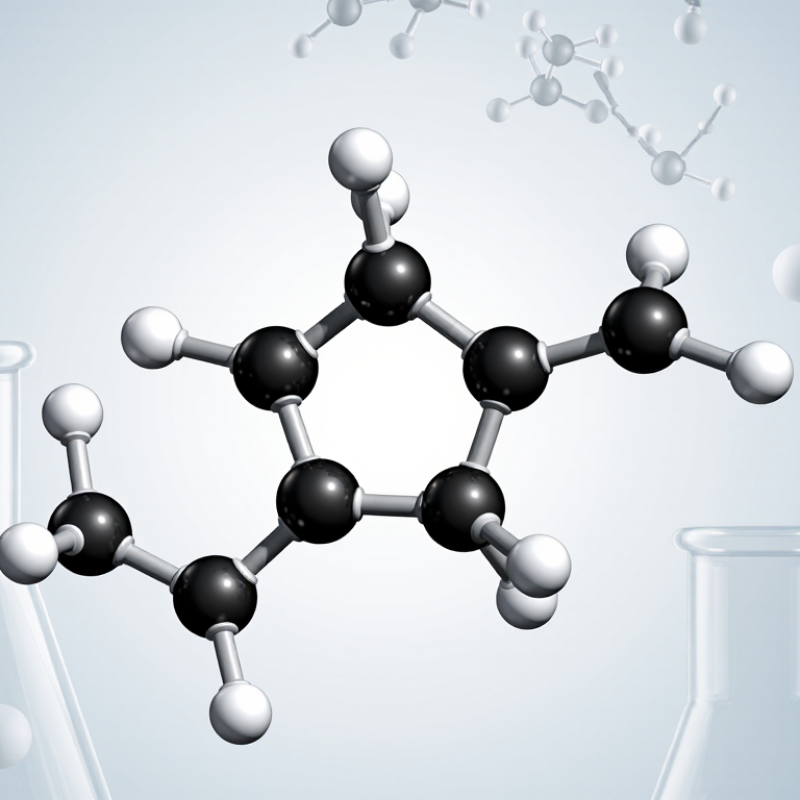
A cyclopropyl compound is a molecule containing a cyclopropyl group: a three-carbon ring attached to the rest of the molecule through one ring carbon. The ring forms a compact triangle, unlike the more flexible rings found in many organic molecules. In a simple structural formula, the group can be written C3H5–; the dash marks its attachment point. That small detail matters. Cyclopropyl is not the same as cyclopropane, the standalone C3H6 molecule.
Tips: When reading a structural formula, count the three connected ring carbons and find the bond leading away from the ring. In skeletal drawings, each unlabeled corner usually represents a carbon atom. Check the structure, not just the name.
The ring’s geometry creates considerable angle strain because its carbon atoms cannot adopt their preferred tetrahedral bond angles. Its bonds can also show unusual bonding behavior. These features may influence reactivity and the shape of nearby molecular regions, but their effects depend on the molecule’s full structure. Researchers use cyclopropyl groups in fields such as medicinal and materials chemistry to adjust molecular properties. The term is simple; its consequences are not always predictable. Real structures can be less tidy than textbook sketches.
How Ring Structure Shapes Its Chemical Properties
Cyclopropyl compounds stand out because their three-carbon ring forces carbon atoms into an unusually tight shape. The C–C–C angles are about 60 degrees, far from the roughly 109.5-degree angles preferred by ordinary tetrahedral carbon. The bonds bend outward rather than pointing directly between atoms. This strained arrangement stores energy and can make some reactions more favorable when the ring opens. But strain does not mean every cyclopropyl compound reacts quickly; its behavior depends on neighboring groups and conditions.
The ring also holds atoms in a compact, relatively rigid geometry. That small change can alter how a molecule fits into a binding site or how its electrons are distributed. When attached to a double bond or an aromatic ring, cyclopropyl bonds may interact with the neighboring pi system. Chemists call this sigma conjugation. It can affect reactivity in ways that a simple structural drawing does not make obvious. Small ring, strong effects.
In practical molecule design, a cyclopropyl group can restrict rotation and shift properties such as shape, stability, and solubility. Those shifts are not automatic benefits. A tighter shape may improve one interaction while disrupting another, and predictions can miss real-world complexity. The ring is a useful design element, but not a magic fix. Its influence becomes clearer when chemists compare closely related structures and measure how each behaves.
Where Cyclopropyl Groups Occur in Nature and Synthesis
Cyclopropyl groups occur in natural fats as well as carefully designed molecules. Some bacteria make cyclopropane fatty acids by adding a carbon across a fatty-acid double bond. The resulting three-membered ring can alter membrane properties. Plants also produce cyclopropene fatty acids, a related but chemically distinct group. Small ring. Important distinction. The structures may look similar on paper, but their bonding and reactivity differ.
In synthesis, a cyclopropyl group offers a compact way to change a molecule’s shape and local chemistry. Its strained bonds can also be opened or transformed, giving chemists useful routes to other structures. In medicinal chemistry, these effects are evaluated case by case; the ring does not automatically improve a compound’s performance. The FDA CDER’s 2023 Novel Drug Approvals report recorded 55 novel approvals, but it does not provide a cyclopropyl-specific count. That limitation matters: approval totals alone cannot show how often this motif appears. A careful account should distinguish natural occurrence, synthetic usefulness, and measured biological effects rather than treating them as interchangeable evidence.
Why Cyclopropyl Compounds Matter: Ring Strain
Approximate ring-strain energies relative to cyclohexane, in kJ/mol. The substantial strain in cyclopropane makes its ring especially useful in chemical synthesis. Cyclopropyl groups also occur in natural products, including pyrethrins, and in medicinal molecules.
How Cyclopropyl Compounds Support Drug Discovery
Why Are Cyclopropyl Compounds Important?
How Cyclopropyl Compounds Support Drug Discovery
In drug discovery, a small structural change can alter how a molecule behaves. The compact, triangular cyclopropyl ring can help researchers adjust a compound’s shape and fit within a target’s binding site. It may also influence lipophilicity, metabolic stability, and the molecule’s movement through biological systems. These effects are not guaranteed; they depend on the surrounding structure and the target.
Tips: Compare matched molecules that differ only by the cyclopropyl group. Check potency, solubility, permeability, and metabolic stability together. A stronger binding result alone may hide a trade-off.
The ring’s rigid geometry can restrict molecular movement, which sometimes helps a candidate adopt a useful binding shape. But adding a cyclopropyl group can also reduce solubility or create unexpected metabolic pathways. Researchers should test these possibilities in appropriate assays, rather than assume the ring improves a molecule. This is where judgment matters: results can be messy, and a promising early signal may not hold up later.
Uses of Cyclopropyl Compounds in Materials and Industry
Why Are Cyclopropyl Compounds Important?
Cyclopropyl compounds contain a compact, three-carbon ring with unusual bond angles. This strained structure can influence how a molecule reacts and how it fits into larger chemical designs. Small changes matter. In industry, these compounds are often useful building blocks rather than high-volume materials themselves.
Manufacturers use cyclopropyl intermediates to create specialty chemicals and functional molecules. Chemists may preserve the ring to shape a product’s structure, or use its reactivity to build other arrangements. In materials research, adding a cyclopropyl group can adjust molecular shape and stability. The effect depends on the surrounding molecule, so it is not a universal upgrade. Their role in bulk plastics is limited compared with their value in specialized formulations.
Tips: When evaluating a cyclopropyl ingredient, check its role in the complete formulation, not just its ring structure. Review stability, handling conditions, and compatibility with neighboring components. The trade-off is real: useful reactivity can also make process control more demanding. A neat molecular design does not always translate into an easier manufacturing step.