Who Are the Top UV Flatbed Printer Manufacturers in China?
Choosing the top UV Flatbed Printer manufacturers in China requires more than comparing advertised speed. A machine may promise 120 square meters per hour, yet struggle with uneven boards, heavy ink coverage, or small text. Real performance appears on the production floor, beside dust-covered plywood and stacked acrylic sheets.
This guide examines established Chinese manufacturers, including JHF, Flora, HandTop, Docan, KingT, and Titan Jet. It does not treat them as identical or declare one universal winner. Instead, it considers printhead stability, white-ink circulation, vacuum-zone design, curing consistency, software usability, service response, and long-term parts availability. These details matter when a printer runs eight hours daily. They also reveal differences that brochures often hide.
Marco Boer, a respected digital-printing analyst, has said, “The future of print is digital.” His observation fits the rapid development of China’s wide-format equipment sector. Chinese manufacturers now serve sign shops, packaging companies, interior decorators, and industrial producers worldwide. However, brand reputation alone is not enough. A factory visit, sample test, and written warranty can expose practical weaknesses. Some specifications remain difficult to compare fairly. That is worth admitting.
The strongest supplier may not offer the fastest machine. It may provide stable color output, clear training, and replacement parts within days. Buyers should inspect printed gradients, fine lettering, and white layers under real production conditions. They should also ask who handles installation after payment. This article offers a careful starting point for that evaluation, not an absolute ranking.
What Is a UV Flatbed Printer and How Does It Work?
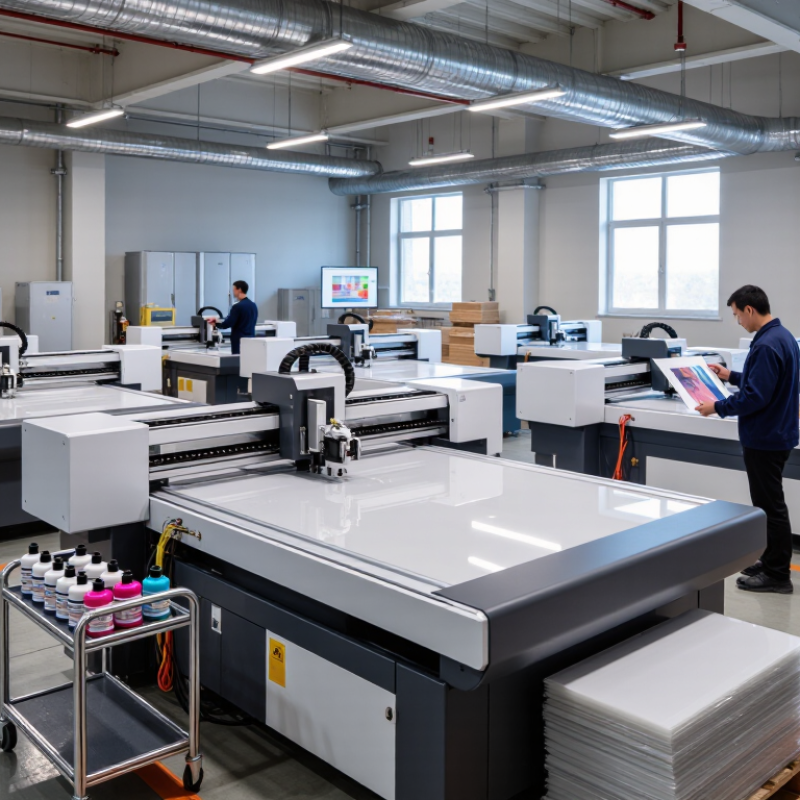
A UV flatbed printer prints directly onto rigid materials instead of using traditional paper rolls. It can handle acrylic, glass, wood, metal sheets, ceramic tiles, and coated boards. The material rests on a flat vacuum table. This keeps the surface stable during printing.
A printhead moves across the bed and places tiny drops of UV-curable ink. UV LED lamps cure the ink almost immediately. The result feels dry and resists light moisture, scratches, and fading. Many machines use cyan, magenta, yellow, black, white, and varnish inks. White ink helps create bright images on dark or transparent materials. Varnish can add gloss or selective texture.
Chinese manufacturers generally focus on modular designs, adjustable print heights, and automated calibration. These features matter when workshops print uneven boards or change substrates frequently. In practice, output quality depends on more than the machine. Operators must check nozzle condition, ink circulation, surface cleanliness, and curing strength.
Small details matter.
A test print should confirm adhesion before a full production run. I have found that impressive samples can hide weak bonding on untreated surfaces. That is an easy mistake. Regular cleaning also protects printheads from dried ink and uneven color. Buyers should examine service response, spare-part access, software stability, and real substrate tests. A fast printer is not always a reliable printer. Some specifications look excellent on paper, yet daily calibration may become inconvenient.
Why Is China a Major UV Flatbed Printer Manufacturing Hub?
China’s role in UV flatbed printing rests on a deep manufacturing base, not one single advantage. UNIDO’s International Yearbook of Industrial Statistics 2024 places China among the world’s largest manufacturing economies, supplying components, electronics, metalwork, and control systems at scale. That density matters: a printer maker can source aluminum frames, linear guides, printhead electronics, and curing lamps within a tightly connected industrial network. Shorter supply routes can reduce lead times and make design revisions easier.
Automation helps, too. The International Federation of Robotics reported that China installed 276,288 industrial robots in 2023, representing 51 percent of global installations. Robot use does not automatically mean better printers. But it supports a wider pool of automation expertise for assembly, inspection, and repeatable production. On a factory floor, that can mean more consistent gantry alignment and cleaner cable routing. Small details count.
China’s supplier ecosystem also makes it easier to build machines for varied workloads, from rigid signage boards to decorated panels. However, manufacturing scale alone does not guarantee print quality or dependable service. Buyers still need to assess color consistency, calibration procedures, spare-part availability, and real-world throughput. Some specifications look impressive on paper. They deserve verification. Industry reports describe broad manufacturing capacity, not the performance of every individual machine.
Which Chinese Manufacturers Lead the UV Flatbed Printer Market?
China’s UV flatbed printer market is led by manufacturers that combine sound engineering, steady production, and practical customer support. The strongest suppliers usually provide several bed sizes, workable ink options, and clear guidance on materials. Their advantage is not just a low purchase price. It is a machine that prints consistently across real production shifts.
Buyers should inspect print samples made on their own materials, such as acrylic, coated wood, or metal panels. Ask about printhead maintenance, curing consistency, replacement-part availability, and technician response times. Small details matter. A glossy sample may hide banding or uneven white ink. Request settings and repeat the test if results vary.
There is no reliable public ranking that settles which Chinese manufacturer leads every segment. A supplier strong in compact machines may not suit high-volume work. Check factory capabilities, service coverage, warranty terms, and references from comparable users. Ask for proof. A specification sheet cannot show the whole story, and even a careful comparison can miss issues that appear after months of use.
Who Are the Top UV Flatbed Printer Manufacturers in China? — Which Chinese Manufacturers Lead the UV Flatbed Printer Market?
Market overview: China has manufacturers serving different UV flatbed printer segments. The table compares product categories and buyer-relevant factors rather than ranking or naming companies; specifications vary by model and should be confirmed with each manufacturer.
| Manufacturer segment | Typical printer category | Common applications | Buyer evaluation points | Market context |
| Industrial production specialists | Large-format flatbed systems designed for repeat production | Signage, display panels, and printed boards | Demonstrated throughput, service access, production workflow, and spare-parts availability | A relevant category for print businesses prioritizing output capacity and machine uptime. |
| Small-format and entry-level suppliers | Compact flatbed printers for smaller work areas and shorter runs | Promotional products, phone cases, small signs, and personalized items | Usable print area, material handling, software support, and local training | Often considered by start-ups and shops with limited floor space or varied small jobs. |
| Rigid-material application specialists | Flatbeds configured to print directly onto rigid substrates | Acrylic, wood, glass, metal sheets, and other compatible flat materials | Maximum substrate thickness, vacuum-bed layout, surface adhesion, and curing settings | Substrate compatibility depends on ink, surface preparation, and the specific printer setup. |
| Hybrid UV printer suppliers | Systems designed for both rigid boards and selected roll-fed materials | Mixed signage and display work using sheet and flexible media | Changeover time, media transport, registration, and performance on each media type | Useful where job requirements include both flat rigid substrates and compatible flexible media. |
| Custom and application-focused builders | Printers configured for particular product sizes, fixtures, or workflows | Industrial components, custom promotional products, and specialized short-run work | Engineering support, sample testing, fixture design, and documented acceptance criteria | A tailored configuration should be assessed with representative materials and production files. |
Note: UV flatbed printer performance is model- and configuration-dependent. Request a print sample using your own substrate, confirm the complete specification and warranty terms, and check after-sales coverage before purchase.
How Do Chinese UV Flatbed Printer Manufacturers Compare?
Chinese UV flatbed printer manufacturers differ more in execution than appearance. Many offer similar print sizes, UV curing systems, and white-ink functions. The real gap appears in calibration, ink stability, and after-sales support. Established manufacturers usually provide clearer testing records, documented tolerances, and stronger engineering teams. Smaller factories may offer lower prices, but their quality can vary between production batches.
A practical comparison should examine printhead alignment, registration accuracy, curing consistency, and software usability. Ask for a live test using your material, such as acrylic, aluminum sheets, or textured board. Check fine text, solid color areas, and white-ink coverage. Reliable suppliers should explain maintenance schedules, spare-part availability, and training procedures. Export experience also matters because packaging, installation guidance, and remote troubleshooting affect actual operating costs. A low purchase price is not always economical. Sometimes, it only moves the expense later.
Tips: Request sample prints from the same file and material. Compare gradients under normal lighting. Ask how quickly technicians respond during breakdowns. Review warranty exclusions carefully. Factory visits can help, but they do not replace documented performance data. One weakness in this market is that some specifications sound impressive yet lack independent verification. Buyers should remain cautious, record every technical promise, and test before ordering large quantities.
What Should Buyers Consider Before Choosing a Manufacturer?
Choosing a UV flatbed printer manufacturer requires more than comparing advertised print speed. Buyers should examine engineering experience, factory quality control, and after-sales support. Ask how long the manufacturer has produced flatbed equipment and request records from similar installations. A clean showroom proves little. A working customer machine proves more.
Request printed samples using your actual materials, such as acrylic, glass, wood, or aluminum. Check fine text, solid-color coverage, white ink density, curing consistency, and adhesion after handling. Inspect the printhead alignment system and bed flatness. Small mechanical errors can become expensive production problems. Ask about ink compatibility, replacement parts, software updates, and operator training. These details often separate dependable equipment from attractive demonstrations.
Review the warranty in writing. Confirm response times, remote diagnosis, technician availability, and spare-parts storage. Reliable manufacturers should explain maintenance schedules without hiding limitations. Compare total ownership costs, including ink consumption, electricity, service visits, and downtime. A cheaper machine may become costly after several months. Speak with existing users, but do not accept only selected references. Ask difficult questions about missed deadlines and unresolved faults. My own evaluation mistake was trusting speed claims before testing continuous production. That lesson still matters. Buyers should also verify export documentation, electrical standards, and safety compliance for their market. A supplier may appear technically strong yet communicate poorly after payment. That risk deserves attention.