
Choosing a Gel Extraction kit is not just a matter of comparing prices. A clean band can become a weak yield if the membrane, binding buffer, or elution step does not suit the sample. Buyers also need to consider spin-column capacity, recovery claims, protocol clarity, and the number of preparations per pack. Small details matter. A tube that looks convenient on a product page may feel less practical beside a crowded bench.
Quality expert W. Edwards Deming famously said, “In God we trust; all others must bring data.” He was not a gel-kit specialist, but the principle fits this comparison: buyers should look for published specifications and transparent performance information, not bold claims alone. This guide reviews ten widely considered options through practical criteria, including recovery, speed, handling, and value. Brand availability and kit formats can vary by region, so confirm current product details with suppliers.
No single kit wins every time. Some workflows prioritize quick purification; others need dependable recovery from small DNA bands. Even careful comparisons have limits: sample type, gel percentage, and user technique can change results. That part is easy to overlook. The aim here is not to declare one universal winner, but to help global buyers match a kit’s documented strengths to their laboratory’s real needs.
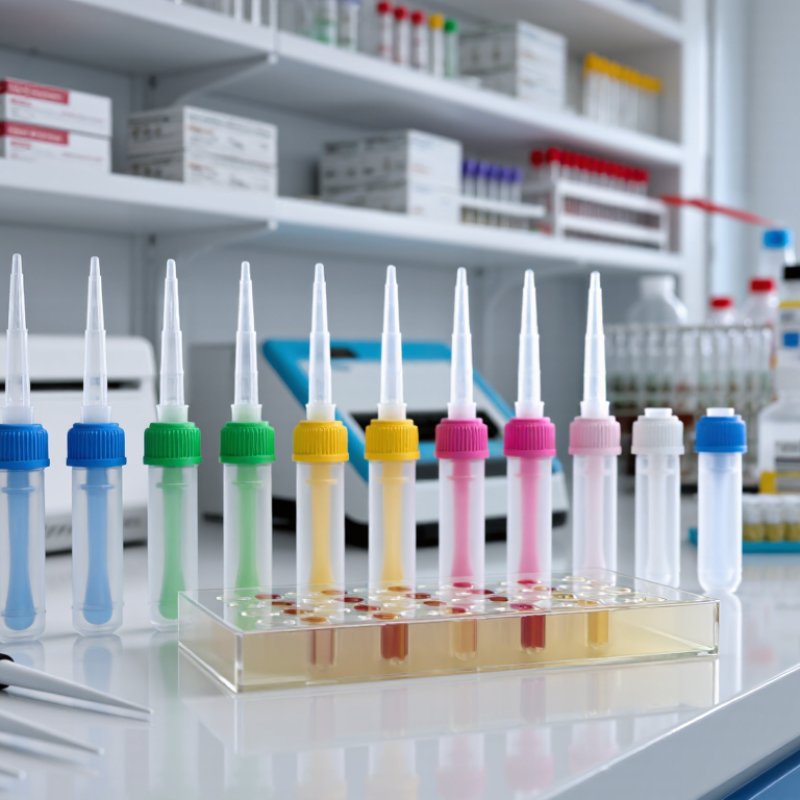
What Are the Top 10 Gel Extraction Kits for Global Buyers?
Gel extraction kits recover a chosen DNA fragment from an agarose gel after electrophoresis. Most use a silica membrane inside a small spin column. The gel slice is dissolved in a binding buffer, often with chaotropic salts, which help DNA attach to the membrane. After centrifugation, wash buffers remove agarose, salts, and other residues. A final low-salt buffer or clean water releases the DNA into a collection tube. That matters.
The method is simple, but small details affect yield and purity. A large gel slice takes longer to dissolve and may reduce recovery. Cutting close to the visible band limits excess agarose. Use the fragment-size range and buffer volumes specified in the kit instructions; formats and conditions can differ. Strong ultraviolet exposure may also damage DNA, so use an appropriate viewing method and keep exposure brief. Results are not always perfect. Very small fragments, for example, may be lost more easily during washing.
Tips: Weigh the gel slice when possible, dissolve it fully, and avoid carrying gel debris into the column. Let the wash solution drain before elution. If the DNA will be used in a sensitive downstream reaction, consider checking its concentration and purity rather than relying on appearance alone.

Global buyers should compare gel extraction kits by fragment-size range, sample capacity, recovery, and downstream purity—not price alone. Check whether the protocol fits your agarose percentage and whether the kit removes common salts and stains. A visible DNA band is not proof of clean DNA. Ask suppliers for recovery data across several fragment sizes, plus lot-specific quality records and clear storage conditions.
Grand View Research’s Life Science Reagents Market report forecasts 7.5% annual growth from 2024 to 2030. This covers a broad market, not gel extraction kits specifically, but it signals a crowded supply landscape. For cross-border purchasing, compare shipping stability, technical support, documentation, and replacement lead times. Verify performance with your own sample type; published yields may not match a faint, narrow band. No kit wins every time.
Tips: Run a small pilot with a low and a high DNA input. Measure recovery and check downstream performance. Keep the gel slice small; excess agarose can reduce yield. A few details are easy to overlook, including local plug compatibility and protocol translation quality. Those gaps deserve a second look.
Gel extraction kits mainly differ by how they capture DNA. Silica spin-column kits dissolve an agarose slice, then bind DNA to a membrane. They are familiar and straightforward, but small fragments may be lost during washing. Magnetic-bead kits use bind-and-separate steps, often with a magnet and no centrifuge. They can suit parallel processing, though bead carryover or poorly tuned binding conditions can affect purity. Some workflows use electroelution; these avoid a binding membrane but need more hands-on setup. Small details matter.
Fragment size, gel percentage, and sample load should guide selection. A kit’s stated recovery range is not a guarantee: the gel slice, salt level, and elution volume all matter. Grand View Research valued the broader global nucleic acid isolation and purification market at about USD 5.6 billion in 2023. That figure covers more than gel extraction, but it reflects wider demand for reliable nucleic-acid cleanup. Buyers should compare recovery data across similar fragment sizes and check whether protocols specify low-melt agarose or standard agarose. Reports rarely capture every bench-level tradeoff.
Tips: Trim away excess gel, weigh the slice, and use the recommended dissolution ratio. Warm the elution buffer before use when the protocol allows. For a tiny DNA band, use a narrow gel slice and avoid over-drying the column; I have found that “more washing” is not always better. Test the workflow with a control sample before scaling up.
Global buyers comparing the top 10 gel extraction kits should look beyond advertised yield. A practical shortlist includes silica-column, magnetic-bead, low-elution-volume, broad-size-range, high-throughput, automation-ready, and low-melt-agarose-compatible formats. It also includes kits designed for inhibitor removal, small DNA fragments, and multiple sample formats. No kit wins everywhere.
Grand View Research estimated the global life-science reagents market at USD 53.9 billion in 2023. That figure covers far more than gel extraction, so it is market context, not kit-specific sales data. NHGRI’s DNA sequencing cost tracking shows how dramatically sequencing costs have fallen since 2001. Cleaner DNA matters in workflows where downstream analysis is costly, but extraction performance still depends on gel concentration, fragment size, and handling.
Ask suppliers for recovery data at the fragment sizes your lab actually runs. Check elution volume, processing time, hazardous-waste requirements, and performance with your agarose type. Compare results using the same DNA input and a measured downstream application. Paper specifications can look precise. Real gels are messier. One caveat: published yield figures may use different test conditions, making direct comparisons imperfect. Grand View Research, Life Science Reagents Market report, 2024; NHGRI, DNA Sequencing Costs.
A practical selection reference: typical DNA fragment-size ranges separated using different agarose gel concentrations.
These approximate ranges are a guide, not a ranking of kits; actual separation depends on gel conditions. Choose a kit that supports your target fragment size and workflow. Lower agarose concentrations generally suit larger fragments, while higher concentrations are used for smaller fragments.
A gel extraction kit should fit the way your laboratory works, not just promise a high recovery rate. Check the DNA fragment range, sample volume, binding capacity, and expected yield. A 1.5% agarose gel, for example, can separate many routine fragments, but very small bands may need extra care during cutting and purification. Small bands need care.
Consider the workflow at your bench. Spin columns suit many standard protocols, while vacuum formats may help when processing several samples. Compare the number of steps, centrifuge requirements, and elution options. If DNA will go into sequencing or cloning, review the kit’s stated purity requirements and confirm them with your own quality-control method. A clean-looking eluate is not proof of clean DNA.
Also check whether the instructions match your gel stain, buffer, and downstream application. These details are easy to overlook when comparing international suppliers. Packaging, storage conditions, and technical support matter too, especially for labs ordering across borders. A small pilot run can reveal slow flow, low yield, or awkward handling before a full purchase. Still, kit comparisons are imperfect: results depend on gel thickness, band size, and operator technique. Record those conditions when evaluating candidates.
| No. | Kit Type / Buyer Profile | Best Match | Typical DNA Size Considerations | Workflow & Throughput | Key Selection Point | Practical Limitation |
|---|---|---|---|---|---|---|
| 1 | Standard silica spin-column gel extraction | Routine recovery of DNA bands from standard agarose gels | Often used for fragments from roughly 100 bp to several kilobases; recovery depends on the membrane and protocol. | Manual, one sample per column; familiar bind, wash, and elute format. | A versatile starting point for general molecular biology work. | Very short fragments and very large DNA can recover less efficiently; check the stated size range. |
| 2 | Small-fragment recovery profile | Short inserts, adapters, and DNA fragments near the lower end of a kit’s range | Choose a system whose datasheet explicitly covers the intended short-fragment size; standard silica systems may lose some small DNA. | Usually a manual column or bead-based workflow. | Review size-specific recovery data and the recommended binding conditions. | Small-fragment recovery can be sensitive to buffer composition and fragment length. |
| 3 | Large-fragment recovery profile | Long DNA fragments or bands intended for downstream assembly and cloning | For fragments above approximately 10 kb, confirm that the method is designed and validated for large DNA. | Typically manual; gentle handling and adequate dissolution time may be important. | Look for stated performance with large fragments and low-shear handling guidance. | Recovery may be lower than for mid-sized fragments; avoid vigorous mixing when instructed. |
| 4 | Low-melt agarose-compatible profile | Applications where DNA exposure to high temperatures should be limited | Fragment-size limits still depend on the binding chemistry and the kit’s validated range. | Manual workflow; follow the kit’s instructions for dissolving or processing low-melt agarose. | Confirm compatibility with the specific agarose type and any required melting conditions. | Low-melt agarose compatibility should not be assumed for every standard gel extraction kit. |
| 5 | Low-volume elution profile | Labs needing concentrated DNA for a downstream reaction | Use the kit’s validated size range; elution volume affects concentration and may affect total recovery. | Usually a standard column workflow with a reduced elution volume where permitted. | Check the minimum recommended elution volume and whether a second elution is advised. | A smaller elution volume can increase concentration but may reduce the total amount recovered. |
| 6 | Magnetic-bead gel extraction profile | Flexible processing, automation, or workflows that already use magnetic separation | Usable size range depends on bead chemistry and binding conditions; verify the range for the intended fragment. | Can be adapted to tubes or plates; requires an appropriate magnetic rack or separator. | Assess bead-to-sample handling, mixing requirements, and compatibility with available equipment. | Bead ratios and handling steps can influence size selection and recovery. |
| 7 | Plate-based, high-throughput profile | Core facilities and laboratories processing many gel bands in parallel | Confirm that the plate format supports the fragment sizes and sample amounts used by the lab. | Designed for parallel processing; may require vacuum, centrifugation, or magnetic equipment. | Match plate format, sample capacity, and equipment to the laboratory’s existing workflow. | Higher throughput may require additional instruments and careful cross-contamination control. |
| 8 | Rapid-workflow profile | Labs prioritizing shorter hands-on time for routine samples | Check the stated fragment-size range rather than assuming speed indicates broad size performance. | Streamlined manual steps; actual processing time varies with gel dissolution and sample count. | Compare total workflow time, including gel cutting, dissolution, washing, and elution. | Rapid processing does not guarantee the highest yield or suitability for every DNA size. |
| 9 | Combined gel extraction and PCR cleanup profile | Labs that need one system for excised gel bands and PCR reaction cleanup | Gel extraction and PCR cleanup may have different size limits; check both protocol specifications. | One platform can support two sample types when the manufacturer provides separate procedures. | Confirm that both applications are explicitly validated and that required buffers are included. | A combined-use kit may not optimize performance for every individual application. |
| 10 | Higher sample-capacity or preparative-use profile | Researchers excising larger gel slices or processing more DNA per sample | Size range is chemistry-dependent; check both maximum DNA input and fragment-size guidance. | Column or batch formats may be available; workflow depends on the sample load. | Compare recommended gel mass, DNA input, and buffer-to-gel ratios with actual sample needs. | Overloading a column or using insufficient dissolution buffer can reduce recovery and purity. |
Buyer’s note: These are non-branded kit profiles organized by laboratory need, not a ranking of specific commercial products. Fragment-size ranges, input limits, recovery, elution volumes, and workflow times vary by product and protocol; verify the current manufacturer’s datasheet before purchase.
