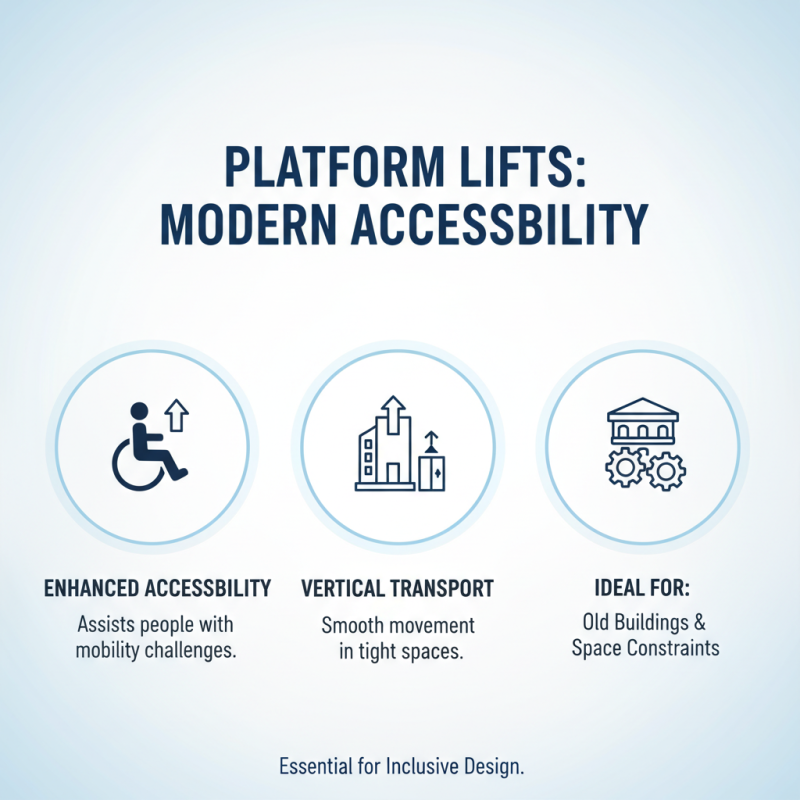
What is Platform Lift Used For in Modern Construction?
In modern construction, efficiency is key. One of the innovations making a difference is the Platform Lift. This equipment enhances mobility on job sites. Workers can quickly transport materials while maintaining safety.
Platform Lifts are versatile and adaptable. They can reach various heights and capacities, meeting specific project needs. This flexibility allows for smoother workflows. However, challenges arise. Operators must be trained to avoid accidents. Regular maintenance is also crucial for performance.
While Platform Lifts improve productivity, their use requires careful consideration. The cost of installation may deter some. Additionally, construction sites must have space for operation. These factors raise questions about practicality. Still, the benefits they offer cannot be ignored.
Understanding the Concept of Platform Lifts in Construction
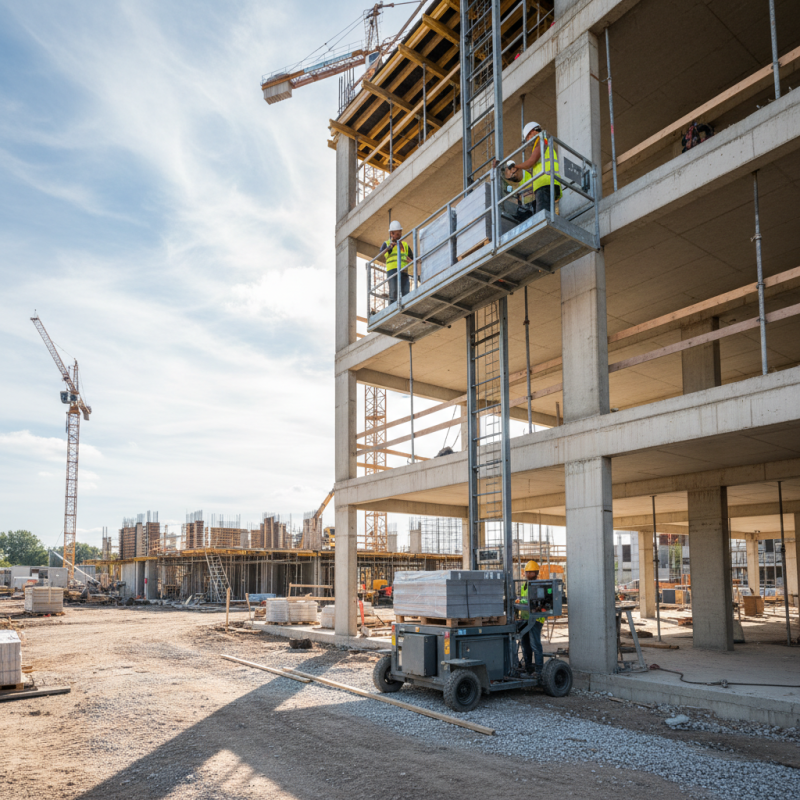
In modern construction, platform lifts have become essential tools. These devices help transport materials and personnel between different heights safely. Understanding their role reveals their significant impact on efficiency and safety at construction sites.
Platform lifts allow for easier movement of heavy loads. They can support up to 1,000 pounds, making them ideal for heavy machinery and building materials. According to industry reports, the lift market is expected to grow by 5% annually, reflecting their increasing importance in logistics. However, misusing these lifts can lead to accidents. Operators must be trained properly to avoid risks.
Tips: Always conduct routine inspections before using a platform lift. Check for wear or damage that could compromise safety.
Moreover, while platform lifts improve workflow, they can create challenges. For instance, depending on design, some lifts may not navigate tight spaces well. This can slow down operations if alternative methods are required. Regular training and assessments can help address these issues and promote a culture of safety.
Key Applications of Platform Lifts in Modern Buildings
Platform lifts have become essential in modern construction. They provide accessibility in buildings of all sizes. In fact, about 70% of newly constructed commercial buildings include some form of lift or elevator system. This is due to increasing demand for inclusivity and ease of access.
Key applications of platform lifts are evident in various settings. In residential buildings, they help those with mobility challenges navigate between floors. In healthcare environments, platform lifts ensure that patients can easily access different areas, such as waiting rooms and treatment centers. Reports indicate that implementing these lifts can enhance patient satisfaction by nearly 25%.
However, the focus on accessibility does come with challenges. Installation can be complex, requiring thoughtful planning and design. Without proper integration, lifts may disrupt building layouts. Additionally, regular maintenance is crucial to ensure safety and functionality. Industry data suggests that neglected lifts can lead to higher rates of malfunction. This reflects a need for ongoing attention in design and operation, as accessibility should never be compromised.
Key Applications of Platform Lifts in Modern Construction
Safety Standards and Regulations for Platform Lifts
In modern construction, platform lifts play a vital role in enhancing safety and efficiency.
However, adhering to safety standards and regulations is crucial. According to the
Occupational Safety and Health Administration (OSHA), improper use of lifts can lead to serious accidents.
Over 30% of construction site accidents involve falls, highlighting the need for strict compliance.
The American National Standards Institute (ANSI) provides guidelines for platform lift usage. These standards focus on
load limits, fall protection, and operator training. For instance, lift operators must undergo proper training to ensure
they understand the equipment. The failure to provide adequate training can lead to
operational errors. Additionally, regular maintenance checks are essential. A 2021 industry report revealed that
20% of platform lift malfunctions resulted from poor maintenance.
Despite these regulations, many construction sites still overlook vital safety practices. Inspections
may be neglected, leading to hazardous conditions. Construction companies face pressure to meet project deadlines, often at the expense of safety.
This raises concerns about the long-term safety culture within the industry. Therefore, reinforcing the importance of compliance with safety standards
is necessary for everyone involved in the construction process.
Future Trends in Platform Lift Technology and Construction Practices
The future of platform lift technology is evolving rapidly. With the construction industry prioritizing efficiency, platform lifts play a crucial role. As stated in recent industry reports, global demand for lifts is projected to grow by 5.4% annually through 2027. This indicates a robust movement towards modern construction practices.
Innovations in platform lifts focus on automation and smart technology. These features enhance safety and operation. For example, predictive maintenance through IoT sensors helps reduce downtime. Therefore, sites can maximize productivity while minimizing risks. However, this shift requires investment. The cost can be a major barrier for some companies.
Tips: Regularly assess your lift technology. Always consider the long-term benefits, not just the immediate costs. Embrace training for your team. As technology evolves, so must the skills of the workforce.
Sustainability is another important aspect. Recent studies show that energy-efficient lifts can significantly lower operational costs. Utilizing eco-friendly materials also enhances a project’s green credentials. Nevertheless, finding the balance between sustainability and affordability can be challenging for developers. As the industry changes, so must our strategies.
What is Platform Lift Used For in Modern Construction? - Future Trends in Platform Lift Technology and Construction Practices
| Application Area |
Lift Type |
Load Capacity (kg) |
Height Range (m) |
Features |
| Residential Buildings |
Vertical Platform Lift |
410 |
1 - 3 |
Compact size, energy-efficient |
| Commercial Spaces |
Hydraulic Platform Lift |
1000 |
2 - 5 |
High stability, smooth operation |
| Construction Sites |
Scissor Lift |
450 |
2 - 8 |
Versatile, high reach |
| Public Transport |
Wheelchair Lift |
350 |
1 - 2 |
Accessibility feature, foldable |
| Industrial Facilities |
Freight Lift |
2000 |
3 - 6 |
Heavy-duty, automated controls |