
What Is a Medical Uniform OEM Partner?

A Medical uniform OEM partner helps a healthcare brand turn a design into garments ready for repeated, demanding use. The relationship can cover fabric selection, pattern development, sampling, production, labeling, and packaging. It is more than placing a logo on a coat. A capable partner asks how uniforms will be worn, washed, and replenished.

Quality expert W. Edwards Deming said, “Quality is everyone’s responsibility.” That principle applies directly here. A smooth sample means little if bulk garments arrive with inconsistent sizing, weak seams, or fabric that feels uncomfortable after a long shift. Good OEM work depends on clear specifications, documented checks, and honest communication when a sample needs revision.

The right partner should explain its production process and show how it checks materials, measurements, stitching, and finished garments. Ask for samples. Compare the actual fabric, pocket placement, and fit—not just a polished product photo. Small details matter. A pen pocket that pulls, or a sleeve that rides up, can frustrate staff through an entire shift.

Still, no supplier is perfect. Even experienced teams can miss a detail, and buyers may change requirements late. That is worth admitting. The practical question is how quickly both sides identify the issue, document the correction, and prevent it from reaching the next order. This article explores what a Medical uniform OEM partner does, how to assess one, and which questions can reveal whether the relationship is built for dependable production.
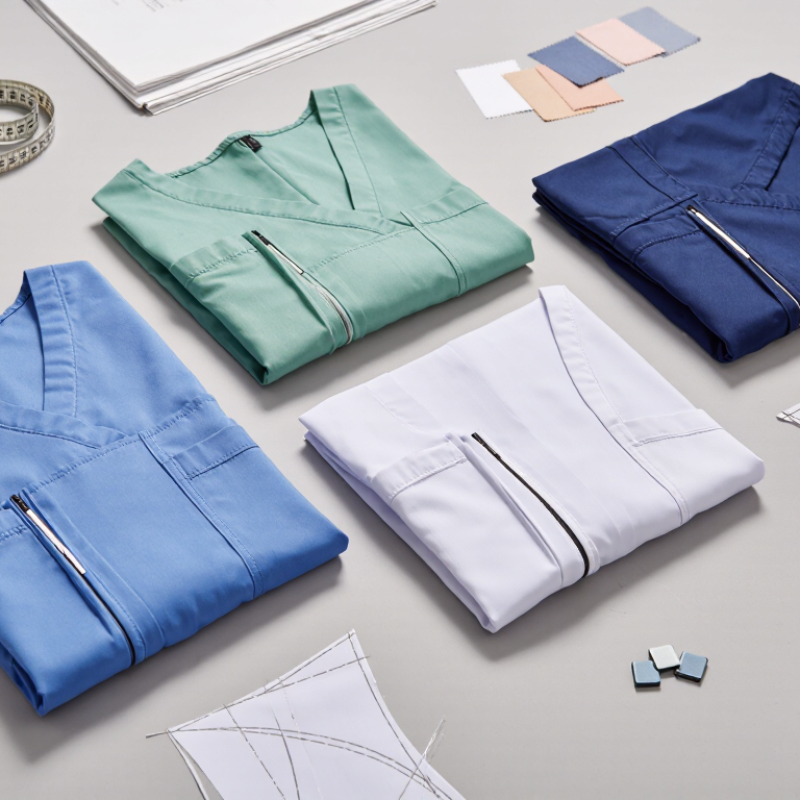
What Is a Medical Uniform OEM Partner?

What a Medical Uniform OEM Partner Is

A medical uniform OEM partner is a manufacturer that produces garments to another company’s designs and specifications. The partner may support pattern development, fabric selection, sizing, sampling, and repeat production. In practice, work starts with a clear product brief: a scrub top’s pocket depth, neckline, sleeve length, and fabric weight. Details matter. A pocket that looks roomy on a drawing may pull when filled with a phone or other daily items.

A capable partner turns requirements into measurable checks. It can document fabric composition, color standards, seam construction, labels, and size tolerances, then compare finished garments with an approved sample. Before bulk production, teams often review fit on different body shapes and test practical features, such as whether a pen slips from a chest pocket. Small checks help prevent rework. Still, one sample cannot represent every wearer or washing routine.

Communication is part of the service, not an extra. The OEM partner should explain minimum order quantities, lead times, sampling costs, and which changes may affect price or delivery. Buyers can ask how defects are recorded and how fabric lots are tracked. No process is flawless. A delayed approval or vague measurement can cause confusion, so written specifications and timely feedback help both sides address issues before cartons are packed.

Products and Services an OEM Partner Can Provide

A medical uniform OEM partner can develop and manufacture scrubs, lab coats, patient gowns, and warm-up jackets to a healthcare organization’s specifications. Services often begin with fabric selection: teams compare weight, stretch, breathability, colorfastness, and performance after repeated laundering. They can also create patterns, grade sizes, sew prototypes, and refine details such as reinforced pocket corners or side vents. Fit matters.

Production support may include bulk manufacturing, inspection, packaging, size labeling, and replenishment planning. A capable partner tests samples for shrinkage, seam strength, and color change, then shares results before large orders proceed. Small details matter: a pocket placed too low can hinder access, while stiff fabric may feel uncomfortable during a long shift. Size charts can look precise and still miss real differences in body shape. That deserves another fitting round.

The World Health Organization’s 2022 Global Report on Infection Prevention and Control estimates that, at any given time, 7 of every 100 patients in acute-care hospitals in high-income countries acquire at least one healthcare-associated infection. This figure does not show that uniforms prevent infections. It does underline why buyers should ask about fabric care instructions, laundering compatibility, and clear product specifications. An OEM partner can document these choices and support consistent reorders, but uniforms remain one part of a broader infection-control program.

How the Medical Uniform OEM Production Process Works

A medical uniform OEM production process begins with a clear product brief. It defines garment styles, size ranges, fabric weight, colors, pockets, closures, and expected order volume. The factory then reviews the details and flags practical issues, such as a pocket that may sag when filled or a seam that could restrict movement.

A tech pack turns these requirements into measurements, sketches, and construction notes. Fabric and trim samples are checked for feel, color consistency, shrinkage, and durability.

Small details matter.

A prototype follows. The buyer checks fit, stitching, pocket placement, and comfort during typical tasks, then records changes for a revised sample.

The first sample is rarely perfect. That is normal, but unresolved comments should not be rushed into bulk production.

Once specifications are approved, the factory grades patterns across sizes, plans material use, and schedules cutting and sewing. During production, inspections can check measurements, seam strength, labels, and finishing at defined stages.

Before shipment, a final review compares garments with the approved sample and order records. Keep those records. Clear communication helps, though occasional delays or fabric variation still need honest discussion.

Quality, Compliance, and Responsibilities in OEM Production

What Is a Medical Uniform OEM Partner?

Quality, Compliance, and Responsibilities in OEM Production

A medical uniform OEM partner turns a buyer’s design and specifications into finished garments. The work begins with practical details: fabric weight, pocket placement, seam strength, and sizing tolerances. These choices affect comfort during long shifts and durability through repeated laundering. Small details matter.

Quality control should happen throughout production, not only at final inspection. Teams can check fabric lots, measure sample garments, and inspect stitching before cartons are sealed. Records of materials, production batches, and test results help buyers trace issues and make informed decisions. A loose seam found early is easier to address than a whole shipment of garments.

Compliance requires clear, current requirements from both sides. The buyer should identify the intended market and applicable product standards; the OEM should confirm what it can verify and document. Requirements may differ by destination, fabric, and garment claims, so assumptions are risky. No checklist catches every sewing flaw. Even a well-run process can miss one, which is why corrective actions and honest reporting matter. A responsible partner raises concerns about inconsistent fabric or unclear specifications rather than quietly substituting materials. The buyer still owns its product decisions, while the OEM is accountable for agreed production controls and accurate records.

What Is a Medical Uniform OEM Partner? - Quality, Compliance, and Responsibilities in OEM Production

An original equipment manufacturer (OEM) partner produces uniforms to a buyer’s specifications. Responsibilities should be defined in the contract and verified against the requirements of the product and destination market.

Area OEM Partner Responsibilities Buyer Responsibilities Useful Records or Acceptance Criteria
Product specifications Review the approved design, construction, fabric, color, size range, and workmanship requirements before production. Flag unclear or conflicting requirements. Provide controlled specifications, artwork, size charts, intended use, destination markets, and approval criteria. Approved technical pack, revision history, signed samples, and documented tolerances for measurements and workmanship.
Materials and sourcing Source materials that match the approved specification; assess suppliers and check incoming fabric, trims, and accessories for identity and defects. Approve material substitutions and identify any restricted substances, performance needs, or sourcing requirements relevant to the market. Material specifications, supplier declarations where applicable, incoming inspection records, and documented approval of substitutions.
Quality management Use documented production and inspection procedures, train relevant personnel, and keep records that support consistent manufacturing. Set product-specific quality requirements, review agreed quality records, and clarify whether independent audits or inspections are required. Inspection plans, training records, in-process checks, final inspection results, and agreed sampling or defect-acceptance rules.
Production controls Control cutting, sewing, finishing, and packing against the approved sample and specifications. Identify and segregate nonconforming items. Approve pre-production samples and communicate order quantities, delivery requirements, and any special handling instructions. Pre-production approval, production checks, measurement results, defect records, and packing-list reconciliation.
Performance and durability Arrange agreed tests through suitable methods or laboratories and report results accurately. Do not make unsupported performance claims. Define required performance based on intended use, such as dimensional stability, colorfastness, or seam strength, and approve test methods and limits. Test reports tied to the tested material or product, with methods, results, and acceptance limits stated. Requirements depend on the product and market.
Legal and chemical compliance Provide accurate material information and cooperate with compliance checks for the agreed markets. Maintain supporting documents available from suppliers. Identify destination-market rules and product claims, confirm applicable obligations, and determine whether testing or declarations are needed. Relevant test reports, declarations, and material records as applicable. Legal requirements vary by jurisdiction; uniforms are not automatically medical devices or protective equipment.
Labeling and traceability Apply approved labels and keep order and production records that allow lots or batches to be identified, where agreed. Approve label content and confirm applicable requirements for fiber composition, care instructions, origin, language, and other disclosures. Approved label artwork, label checks, lot or order references, and records connecting finished goods with relevant material and production information.
Change control Notify the buyer before changes to materials, processes, subcontractors, or production locations that could affect approved product requirements. Review proposed changes, assess impact on fit, quality, labeling, testing, and compliance, and document approval or rejection. Change request and impact assessment, updated specifications where needed, and written approval before implementation.
Nonconformities and corrective action Contain affected goods, investigate causes, propose corrective action, and report findings within agreed timelines. Define notification and disposition procedures, review corrective-action evidence, and decide whether rework, replacement, or another remedy is acceptable. Nonconformity report, affected quantity and lot details, root-cause findings, corrective-action records, and documented disposition.
Delivery and documentation Pack goods to the approved requirements, protect them during shipment, and provide agreed shipping and product documents. Confirm delivery terms, import documentation needs, delivery address, receiving process, and inspection or claim timelines. Packing list, shipment records, agreed inspection documents, and order reconciliation. Import and customs documents depend on the transaction and destination.

Key principle: an OEM partner can manufacture to agreed requirements, but the buyer and manufacturer should explicitly allocate regulatory, labeling, testing, approval, and post-delivery responsibilities in their agreement.

How to Evaluate and Choose an OEM Partner

What Is a Medical Uniform OEM Partner?

How to Evaluate and Choose an OEM Partner

A medical uniform OEM partner develops and produces garments to a buyer’s specifications. Choosing one takes more than comparing unit prices. Start by sharing a clear tech pack: fabric composition, color references, size chart, seam details, pocket placement, and labeling needs. Ask how the team handles pattern changes, fabric sourcing, and production scheduling. Request a preproduction sample, then inspect fit, stitching, closures, and color under ordinary clinic lighting. Small details matter.

Next, evaluate quality controls and communication. Ask what checks happen during cutting, sewing, and final packing, and request examples of inspection records. Confirm how defects, late materials, or revised quantities are reported. Discuss minimum order quantities, lead times, payment milestones, and who owns approved patterns. A low quote can hide costs in rework or shipping. Still, no checklist guarantees a smooth project; a sample may not reveal every issue in bulk production. Consider a small trial order, where practical, before scaling.

Tips: Send the same specification to each candidate and compare written replies. Keep fit notes and sample photos. Ask for a realistic timeline, not an optimistic promise. Notice whether the partner flags unclear instructions; that can be useful.