How to Choose the Best Mobile Generator for Your Needs?
Choosing the right Mobile Generator is not simply a matter of comparing wattage and price. It requires a clear view of load demand, operating conditions, fuel access, noise limits, and expected runtime. The International Energy Agency’s Electricity 2024 report forecasts global electricity demand growth of more than 4% in 2024 and 2025. This rising demand increases pressure on temporary power systems, especially at construction sites, outdoor events, farms, and emergency facilities.
A practical selection begins with a measured load list. Record starting watts for motors, pumps, compressors, and refrigeration units. A generator rated only for running watts may fail when several motors start together. Fuel type also matters. Diesel units often suit long, heavy-duty operation, while gasoline models can support lighter and shorter tasks. Natural gas may reduce onsite fuel storage, but its performance depends on supply reliability. That detail matters. The U.S. Energy Information Administration continues to identify fuel availability and regional infrastructure as important factors in power planning. Environmental conditions deserve equal attention. A dusty worksite may require stronger filtration, while a coastal location needs corrosion protection.
Industry forecasts offer useful direction, but they are not a substitute for site testing. Grand View Research and MarketsandMarkets report continued growth in backup and portable power equipment, although their market estimates differ by scope and methodology. Buyers should therefore verify efficiency, emissions certification, service support, transfer-switch compatibility, and manufacturer warranty terms. A quieter machine may cost more initially, yet it can reduce disruption near homes or hospitals. The best Mobile Generator is rarely the largest one. It is the unit that delivers stable power, safe operation, manageable costs, and dependable support when conditions become difficult. Perfect selection is difficult, but careful measurement prevents expensive mistakes.
Understanding Mobile Generators and Their Main Applications
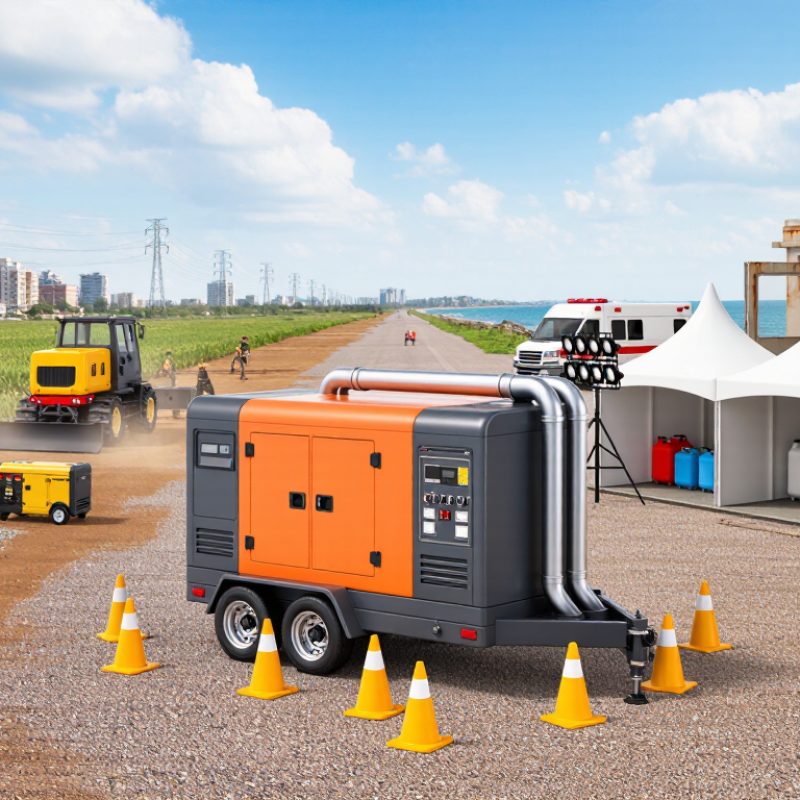
Mobile generators provide temporary electricity where fixed power is unavailable, unreliable, or expensive to extend. Their main applications include construction sites, outdoor events, emergency response, agricultural work, and remote maintenance. A contractor may power lighting, drills, pumps, and battery chargers beside a half-finished building. An event organizer may need quieter electricity for sound equipment and food refrigeration. Emergency teams often use generators for communication devices, medical support, and water removal after severe weather.
Choosing the right unit starts with the load, not the advertised maximum output. List every device, record its running wattage, and check its starting surge. Motors and compressors can demand much more power for a few seconds. Add a practical reserve of 20 to 30 percent to prevent constant overload. Fuel availability, runtime, transport weight, noise, weather protection, and outlet types also matter. A compact unit may fit in a vehicle, yet fail during a cold morning startup. That detail is easy to miss.
From field experience, placement affects performance as much as capacity. Keep the generator outdoors, on stable ground, and away from doors and windows. Protect electrical connections from rain. Never ignore ventilation or operating instructions. In my view, “portable” can be misleading; a heavy model may require wheels and two people. Smaller is not always better. Estimates based on perfect conditions deserve careful review, because dust, heat, aging cables, and poor maintenance reduce real output. A simple load test before work begins can reveal problems that specifications cannot.
How to Choose the Best Mobile Generator for Your Needs?
Typical continuous power requirements by mobile generator application
These representative planning values show how generator capacity typically increases with application complexity. Small recreational and home-essential loads often require around 2–5 kW, while construction, mobile food service, and event operations may require 10–50 kW or more. Final sizing should account for starting currents, continuous loads, safety margin, and local operating conditions.
Comparing Generator Types, Fuel Options, and Key Features
Choosing a mobile generator starts with the load, not the advertised wattage. Add the running watts of essential equipment, then include each motor’s starting surge. Refrigerators, pumps, and compressors can briefly demand two to four times their running power. Leave a 20% reserve for unexpected loads. That cushion is often overlooked.
Conventional generators suit tools and large resistive loads. Inverter generators usually provide cleaner power for computers, medical electronics, and sensitive controls. They also reduce engine speed during light demand, which can lower noise and fuel use. Noise matters too. The U.S. Department of Energy identifies sound level as a practical purchasing factor for portable power equipment. Check the rated decibel figure at a stated distance, not only the marketing description.
Fuel choice changes operating cost and storage planning. According to U.S. Energy Information Administration 2023 conversion data, diesel contains about 137,381 British thermal units per gallon. Gasoline provides roughly 120,286, while propane supplies about 91,452. Diesel can support efficient heavy-duty operation, but gasoline starts easily and is widely available. Propane stores well, though it may deliver less output under cold conditions. Dual-fuel models add flexibility, yet their controls and maintenance deserve careful inspection. Look for overload protection, ground-fault protection, low-oil shutdown, weather resistance, and a clear maintenance schedule. No choice is perfect. Recheck your assumptions after measuring real appliances, because nameplate ratings can be surprisingly optimistic.
Selecting the Right Model Based on Budget and Long-Term Use
Choosing a mobile generator starts with your real workload, not the largest number on a sales sheet. List essential equipment, then add starting watts for motors, pumps, and compressors. A refrigerator may run on modest power but need a sharp startup surge. The U.S. Energy Information Administration reported that weather-related events caused about 83% of major U.S. power outages in 2021. Reliability is becoming harder to treat as optional.
Budget for more than purchase price. Fuel use, oil changes, battery replacement, transport, and storage can reshape the total cost within a few years. A diesel unit may suit frequent, heavy-duty work, while a gasoline model can cost less for occasional operation. Dual-fuel flexibility sounds attractive, but additional controls may require more maintenance. I have seen buyers underestimate cable length and trailer access. That mistake becomes expensive on a remote site. The U.S. Department of Energy recommends matching equipment capacity to actual demand and avoiding unnecessary oversizing, which can waste fuel and increase operating costs.
Tips: Record running watts and starting watts separately. Compare fuel consumption at 50% and 75% load. Check service intervals before buying. Choose weather protection for outdoor work. Leave a capacity margin, but not an enormous one. My own preference is cautious sizing with measurable records, although real loads often change. Recheck the calculation after adding tools, lighting, or temporary pumps. Calibration matters.
How to Choose the Best Mobile Generator for Your Needs? - Selecting the Right Model Based on Budget and Long-Term Use
| Generator Category | Typical Rated Output | Typical Purchase Budget | Approximate Runtime at 50% Load | Typical Noise Level | Approximate Weight | Best Use | Long-Term Value |
| Compact Inverter Generator | 1,000–2,000 W | US$400–US$1,000 | 6–12 hours per tank | Approx. 48–60 dB(A) | 25–55 lb | Camping, electronics, lighting, and small appliances | Excellent fuel efficiency and clean power; limited capacity for large appliances |
| Mid-Size Inverter Generator | 2,000–4,000 W | US$800–US$2,000 | 5–10 hours per tank | Approx. 50–65 dB(A) | 45–100 lb | Refrigerators, sump pumps, tools, RV use, and emergency backup | A strong balance of portability, quiet operation, and usable output |
| Portable Open-Frame Generator | 3,000–7,000 W | US$500–US$1,500 | 7–14 hours per tank | Approx. 65–75 dB(A) | 90–180 lb | Construction tools, workshops, and occasional home backup | Lower initial cost and strong output; louder and less fuel-efficient than inverter types |
| Dual-Fuel Portable Generator | 3,000–8,000 W | US$700–US$2,000 | 8–18 hours, depending on fuel and load | Approx. 65–75 dB(A) | 100–220 lb | Extended outages and locations with limited fuel availability | Fuel flexibility improves resilience and storage options |
| Large Towable Diesel Generator | 10–50 kW | US$8,000–US$35,000 | 12–36 hours per tank | Approx. 70–85 dB(A) | 700–2,500 lb | Commercial sites, events, farms, and continuous-duty applications | High durability and long service life, but requires transport, maintenance, and suitable ventilation |
Selection Notes: Rated output is the continuous power a generator can provide; starting watts may be significantly higher for motors and compressors. Noise, runtime, weight, and price vary with load, fuel type, tank size, regulations, and operating conditions. Always operate fuel-powered generators outdoors, away from doors and windows, and follow the applicable safety instructions.