How Can Forklift Collision Detection Systems Improve Safety?
In the ever-evolving landscape of warehouse operations, safety remains a top priority. Forklifts are essential but pose risks in busy environments. Experts emphasize the importance of advanced safety measures, particularly the "Forklift Collision Detection System." Dr. Emily Thompson, a leader in warehouse safety technology, states, "Implementing collision detection can significantly reduce accidents and protect workers."
A Forklift Collision Detection System employs sensors and cameras to monitor surroundings. This technology detects obstacles and alerts operators, helping to prevent accidents. In busy warehouses, human sight can be limited. This system adds an extra layer of protection. However, it is crucial to remember that technology cannot replace thorough training and awareness. Reliance on systems alone might foster negligence.
Despite its advantages, the effectiveness of the Forklift Collision Detection System can vary. Regular maintenance and updates are essential for optimal performance. Workers must remain vigilant, as no system is infallible. Reflection on these aspects is vital for continuous improvement. Implementing such systems shows commitment to safety, but a comprehensive approach is necessary for lasting change.
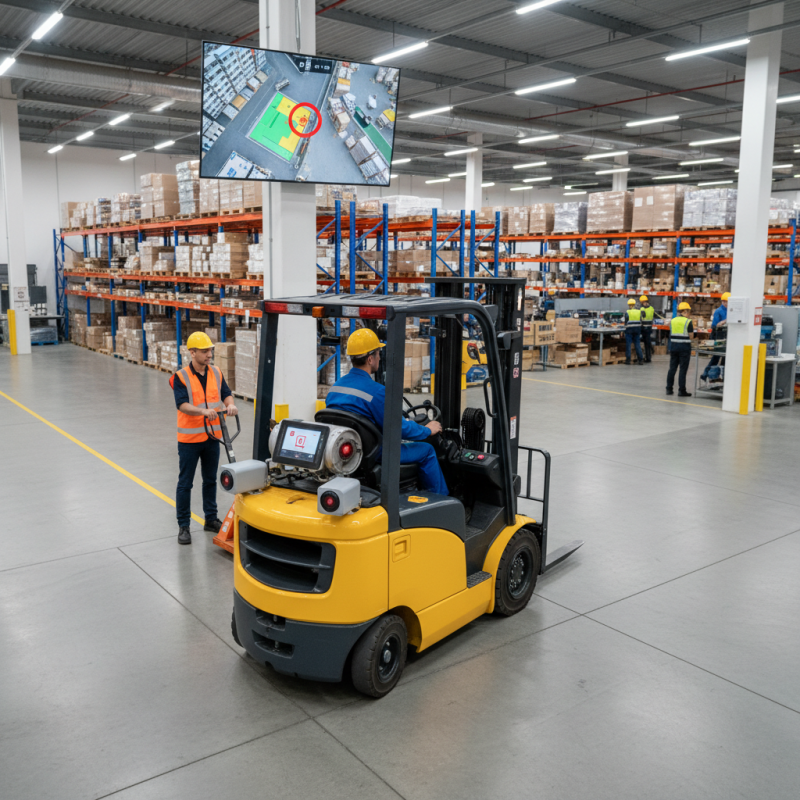
Overview of Forklift Collision Detection Systems
Forklift collision detection systems are vital for enhancing workplace safety. These systems use sensors to monitor the environment around forklifts. They detect obstacles, pedestrians, and other vehicles in real time. When a potential collision is imminent, these systems can trigger alerts. This timely warning allows operators to take corrective actions.
However, not all systems are flawless. Some sensors may struggle in poor lighting conditions. Others might not detect smaller obstacles, which can lead to near-miss accidents. Regular maintenance and updates are necessary to improve their effectiveness. Operators need training to respond properly to the system's alerts. Awareness of the limitations can help prevent complacency.
Integrating collision detection technology with operator training creates a safer work environment. It’s crucial to evaluate the system's performance ongoingly. Continuous improvement will address its weaknesses and enhance reliability. Safety is not just a goal; it should be a routine practice.
The Importance of Safety in Industrial Environments
Safety is a critical concern in industrial environments. According to the National Institute for Occupational Safety and Health (NIOSH), forklifts are involved in about 70 accidents per day in the United States. This statistic raises alarms. Inadequate safety measures can lead to injuries, costly litigation, and even fatalities. Businesses must prioritize safety to protect their workforce.
Forklift collision detection systems can significantly enhance safety. These systems use advanced technology to detect obstacles and warn operators in real-time. A report by the Occupational Safety and Health Administration (OSHA) indicates that implementing such systems can reduce accidents by up to 25%. This improvement is tangible. However, many companies hesitate to invest in these technologies, often citing budget constraints or unfamiliarity. This reluctance can lead to ongoing risks, putting employees in jeopardy.
Creating a safe environment goes beyond technology. Employee training and safety protocols are equally important. The Bureau of Labor Statistics points out that effective training can reduce the risk of forklift-related incidents. Yet, many workers do not receive comprehensive training. It's a gap that needs addressing. With the right steps, industries can turn these statistics around. Forklift collision detection systems are part of the solution, but they must be paired with a robust safety culture.
Forklift Collision Detection System Safety Impact
How Collision Detection Systems Work
Forklift collision detection systems play a crucial role in enhancing workplace safety. These systems use sensors and cameras to monitor the environment around forklifts. They can alert operators to potential collisions in real-time. According to industry reports, workplaces equipped with such systems have seen a decrease in accident rates by up to 40%.
Collision detection systems typically rely on technologies like LiDAR and ultrasonic sensors. LiDAR creates high-resolution maps of the surroundings, while ultrasonic sensors detect nearby objects. This combination enables early warning signals. These features can significantly reduce blind spots. With a mere two-second alert, operators can avoid dangerous situations, potentially saving lives.
Tips: Regularly test your collision detection system. Ensure sensors are clean and functioning properly. Also, provide thorough training for forklift operators to understand system limits.
Despite advancements, some challenges remain. Not all systems can detect every object, particularly in cluttered environments. Additionally, operator reliance on technology may lead to complacency. Addressing these issues requires ongoing training and system evaluation. Prioritizing both technology and human factors is essential for optimal safety.
How Can Forklift Collision Detection Systems Improve Safety? - How Collision Detection Systems Work
| Feature | Description | Benefit | Typical Applications |
| Proximity Sensors | Detects obstacles in close range to the forklift. | Reduces the likelihood of collisions by alerting operators. | Warehouses, loading docks. |
| Cameras and Imaging | Provides a real-time view of the surroundings. | Enhances operator awareness and decision making. | Distribution centers, factories. |
| Radar Systems | Uses radar waves to detect objects and measure distances. | Offers reliable detection in poor visibility conditions. | Cold storage, outdoor sites. |
| Collision Avoidance Software | Analyzes sensor data to predict potential collisions. | Automatically adjusts forklift routing to avoid hazards. | High-traffic warehouses, manufacturing plants. |
| Alarm Systems | Auditory and visual alerts to warn of imminent collisions. | Increases response times to avoid accidents. | Loading docks, workshop areas. |
Benefits of Implementing Collision Detection Technologies
Forklift collision detection technologies have become vital in enhancing workplace safety. According to the National Safety Council, forklift accidents account for approximately 10% of all workplace injuries. Implementing collision detection systems can drastically reduce these incidents. By using sensors and cameras, these systems provide real-time alerts to operators, significantly lowering the chances of accidents. Research has shown that workplaces using these technologies experience a 30% decrease in collision-related incidents.
Tips: Regularly assess your collision detection system. Ensure that all sensors are functioning correctly and are visible to operators. Training employees on the system's capabilities can further improve safety.
Data points suggest that businesses can save thousands annually through reduced insurance premiums and fewer workers' compensation claims. However, not every facility has adopted this technology. Budget constraints often hinder implementation, leaving many vulnerable to accidents. Relying solely on human vigilance can be inadequate. Regular evaluation and updates of safety protocols are crucial.
Tips: Encourage feedback from workers about the collision detection systems. Their perspectives can lead to improvements that managers might overlook. Implementing a routine check will maintain system effectiveness.
Case Studies: Success Stories in Forklift Safety Enhancement
In recent years, many warehouses have implemented forklift collision detection systems. These systems have shown significant improvements in safety. For instance, a case study revealed a 30% reduction in workplace accidents after these systems were introduced. Employees reported feeling more secure, knowing that potential collisions were being monitored.
An intriguing case involved a large distribution center. They installed advanced sensors to track forklift movements. Within six months, incidents dropped by 25%. This not only boosted employee confidence but also led to increased productivity. Proper data collection can reveal blind spots in operations, offering opportunities for improvement.
Tips: Consider regular training alongside technology. Employees must understand how to use these systems effectively. Communication is key. Keeping everyone informed enhances the safety culture.
Another interesting finding shows that 40% of all workplace accidents involve forklifts. This statistic emphasizes the importance of adopting robust safety measures. Relying solely on technology may not be enough; continuous human oversight and interaction are vital. Balancing tech solutions with skilled personnel can lead to a more significantly safer working environment.