



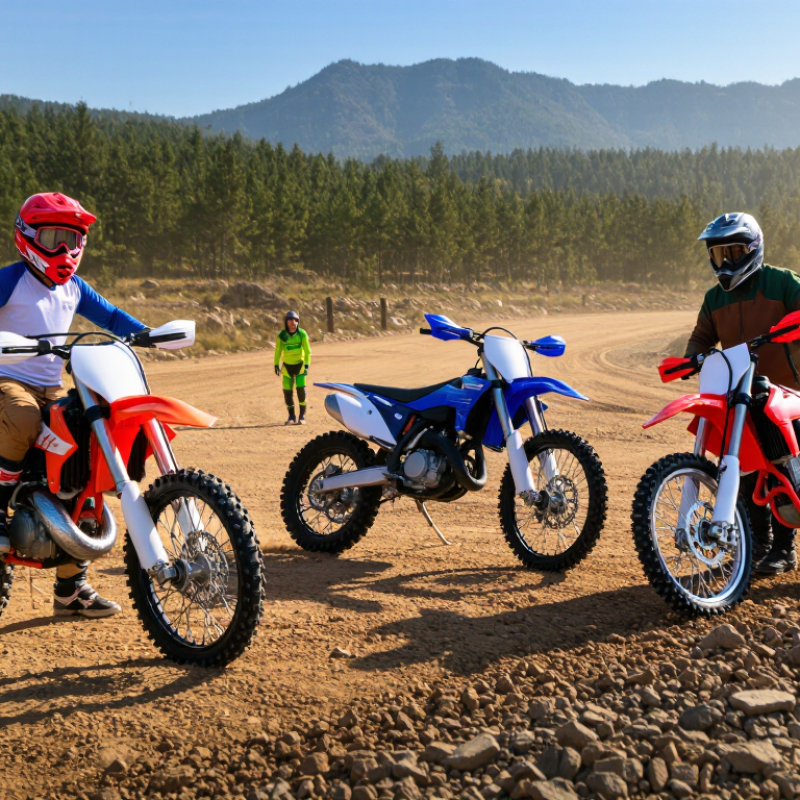
A 250 Cc Dirt Bike can feel calm on a broad fire road and demanding on a tight, rocky trail. In 2026, riders can choose from motocross, cross-country, and trail-focused models. Their shared engine size does not guarantee a shared riding experience. Suspension setup, seat height, gearing, and maintenance needs matter just as much. Small details count.
The Motorcycle Industry Council’s Motorcycle Statistical Annual provides useful context on U.S. motorcycle sales and ownership. NHTSA’s Traffic Safety Facts: Motorcycles adds roadway crash data, though those figures do not directly describe off-road riding. Together, these reports help frame the market and safety discussion; they cannot tell you which bike will fit your trails or skill level. That part takes judgment. A tall seat can turn a simple stop into an awkward tiptoe, while stiff motocross suspension may feel harsh on roots and stones. I would not choose by horsepower alone. That shortcut misses too much.
This guide compares leading 250cc dirt bikes by purpose, handling, and rider fit. It considers newer riders, experienced racers, and weekend trail riders. Specifications can change by model year and region, so confirm details with the manufacturer or a local dealer before buying. No single bike suits everyone. The best choice is the one you can control comfortably, maintain reliably, and enjoy after the first ride—not just admire in a showroom.
In FIM MX2, 250cc is the upper displacement limit for four-stroke engines, not a promise of identical performance. The limit gives the class a clear technical boundary. A bike at that ceiling still needs to meet the event’s applicable technical requirements. The rule defines eligibility, not how fast every rider will go.
Displacement is only one part of a bike’s character. Throttle response, gearing, suspension setup, and engine tuning all affect how power reaches the rear wheel. On a damp track, smooth delivery can matter more than peak output. In tight turns, a manageable engine may help a developing rider hold a line. Small details count.
It is easy to overread the number. A 250cc four-stroke does not automatically suit every rider, and MX2 rules apply to competition, not every recreational trail bike. Riders comparing machines should consider their skill, the terrain, and maintenance needs alongside engine size. For racing, check the current FIM regulations and event requirements; specifications can change. That part is worth double-checking.
| Rider or Use | Best-Fit 250cc Bike Type | Typical Configuration | Why It Fits | Main Trade-Off |
|---|---|---|---|---|
| Motocross racer | 250cc four-stroke motocross bike | Usually a liquid-cooled, single-cylinder engine with competition-focused suspension and gearing. | Designed for motocross tracks, jumps, rapid acceleration, and repeated hard use. | Firm suspension and a demanding power delivery can be tiring on rough trails or for newer riders. |
| Cross-country or enduro rider | 250cc four-stroke off-road race bike | Often combines a liquid-cooled single-cylinder engine with off-road gearing and suspension settings. | Suited to longer off-road events and varied terrain where traction and control matter as much as outright speed. | Competition-oriented maintenance schedules may require more frequent attention than recreational trail bikes. |
| Beginner or casual trail rider | Recreational 230–250cc trail bike | Many use a milder four-stroke engine; air-cooled designs are common in this category. | Generally tuned for approachable power and steady trail riding rather than race starts or high-speed track work. | Typically heavier or less powerful than a purpose-built motocross bike of similar displacement. |
| Experienced rider seeking versatility | 250cc four-stroke dual-purpose or trail-oriented bike | Configuration varies; road-legal versions include equipment required for public-road use in their market. | Can suit riders who want a machine for both off-road routes and permitted road travel. | Road equipment and comfort-focused setup may add weight or limit performance on a motocross track. |
| Rider choosing between two- and four-stroke power | Compare engine type as well as displacement | A 250cc two-stroke and a 250cc four-stroke differ in power delivery, engine design, and class eligibility. | Considering engine character and intended terrain helps make a more useful comparison than displacement alone. | Displacement figures alone do not indicate equivalent power, handling, or suitability. |
| FIM MX2 class reference | Competition-class rule, not a bike recommendation | FIM MX2 sets a maximum engine capacity of 250cc for four-stroke motorcycles. | Provides a clear displacement ceiling for four-strokes in the MX2 World Championship class. | A 250cc capacity does not by itself confirm that a motorcycle meets every current class or event requirement. |
| Selection note: These are general bike categories, not model-specific specifications. Equipment, weight, maintenance requirements, and legal status vary by model, year, and market. Check the current event regulations before entering a competition. | ||||

A 250cc dirt bike can feel lively on a smooth track and demanding on a rocky climb. Compare power delivery, not peak horsepower alone. A broad, predictable torque curve helps riders crawl over roots without constant clutch work. For 2026 models, check whether published power figures come from comparable tests; different methods can make a small advantage look bigger than it is.
Weight matters most when the trail gets tight. A difference of a few kilograms can affect slow turns, lifting the bike, and fatigue late in the day. Check whether each figure is dry or ready to ride, including fuel. Then compare suspension travel, adjustability, and damping range. Plush settings may suit rough trails, while firmer support can help on repeated jumps. Setup counts.
Service data deserves equal attention. Compare oil and filter intervals, valve-inspection schedules, and the cost of routine parts in the owner’s manual. Competition use may call for more frequent checks than casual trail riding. Keep the manual handy. I would also note seat height and reach during a test ride; spec sheets cannot reveal whether a bike feels awkward after an hour. One imperfect detail: published weights and service estimates are not always measured on the same basis, so verify them before choosing.
A 250cc motocross bike suits riders who spend most of their time on groomed tracks, where quick acceleration, firm suspension, and close gear spacing help through jumps and tight corners. That setup can feel harsh on roots and rocky paths. Newer riders may also find the throttle response tiring after several laps.
Fit matters: check that you can stand comfortably, reach the controls, and manage the bike at low speed. A fast lap means little if the bike wears you out.
Enduro models are better matched to longer, rougher routes, with broader gearing and suspension tuned to absorb changing terrain. Look for predictable power when climbing loose hills or crossing damp roots.
Trail bikes often favor easier control and a calmer pace over race-focused response. They can be a sensible choice for learning on forest paths, though deep sand or steep climbs may expose limited suspension or ground clearance.
Short is not always easy. A lighter-feeling bike can still be tall, and seat height alone does not tell the whole story.
I would not choose by displacement alone; rider weight, maintenance condition, and the terrain you actually ride can change what feels manageable. Before buying, sit on the bike and, if possible, ride it over familiar ground.
On many 250cc motocross bikes, 21-inch front and 19-inch rear wheels are standard. That pairing helps the front wheel roll over ruts and small obstacles, while the wider rear tire supports traction under acceleration. It is a familiar setup, not a guarantee of a good fit. A rider’s height, inseam, and experience all affect how manageable the bike feels.
Check the bike on level ground, wearing your riding boots. Can you steady it when stopped, and shift your weight without feeling stretched? Don’t judge fit by seat height alone. Suspension sag and setup can change how tall the bike sits, so ask a qualified mechanic or dealer to check them before comparing models.
Then, if possible, ride over a few turns and uneven patches. Notice whether the front tracks where you expect and whether the rear feels easy to place. Small details matter.
Wheel size also shapes handling. The larger front wheel may feel calmer over rough ground, but a taller bike can be harder to dab a foot on. That trade-off is easy to overlook on a showroom floor. A spec sheet can make fit seem simpler than it is; even experienced riders sometimes need adjustment time. If the standard setup feels too tall or awkward, compare other seat and suspension dimensions rather than assuming every 250cc bike will handle alike.
A 250cc dirt bike’s purchase price is only the opening number. Estimate yearly ownership by tracking riding hours, scheduled service, replacement parts, and fuel use. Check the owner’s manual for service intervals; dusty trails and slow, hot riding can shorten them. Oil, filters, chain care, and valve checks may fall due at different times. One estimate will be wrong. Revise it after a few months of real riding.
Build a simple cost sheet. Write down each service interval, then price the required oil, filters, and labor in your area. Add likely wear items, such as tires, brake pads, chain, and sprockets, but avoid replacing parts just because a calendar says so. Inspect them often. For fuel, record liters used over several rides and divide by riding hours. Multiply that rate by your expected annual hours and local fuel price. The result is more useful than a generic online estimate, though terrain and throttle habits can change it.
Tips: Keep a small log in your phone or garage notebook. Note ride hours, fuel, parts, and service dates. Set aside a monthly amount for maintenance, plus a buffer for a puncture or worn tire. Costs vary, and the buffer may feel excessive—until a busy riding month proves otherwise.
Compare estimated fuel, scheduled service, and wear-part costs for three common riding styles.
Planning estimates in USD per year, excluding purchase price, insurance, repairs, and riding gear. Assumptions: fuel at $3.50 per gallon; trail riding 50 hours at 0.7 gal/hour, motocross 80 hours at 0.9 gal/hour, and mixed trail/enduro 70 hours at 0.8 gal/hour. Service and wear-part budgets are estimates; actual costs vary with the bike, terrain, maintenance schedule, and riding conditions.
